
Green Gastroenterology Challenge Showcase 2026 video and case study reports
The Green Gastroenterology Showcase took place online on 4 November 2026 from 14:00 to 16:25. The event highlighted the work of the six teams in the Green Gastroenterology Challenge, who are leading the way in making gastroenterology services more sustainable.
At the event, each team presented its Sustainable Quality Improvement (SusQI) project to a panel of judges. The projects focused on priority areas identified through carbon footprinting and collaboration with Challenge partners. The aim was to reduce environmental harm and financial waste while improving clinical and social value. The teams presented to a judging panel including:
- Lucy Brown, Development Director, Centre for Sustainable Healthcare
- Dr Sandeep Siddhi, Consultant Gastroenterologist, Aberdeen Royal Infirmary, BSG Sustainability Lead and Green Endoscopy Clinical Lead
- Lisa Roffey-Harris, Nurse Lead, Strategy & Innovation, Midlands Endoscopy Training Academy, BSG Nurses Section Committee Deputy Chair

“All the teams made a valuable contribution by demonstrating what our speciality can achieve when we combine clinical expertise with environmental awareness and a structured approach to improvement.”
Dr Harriet Gordon, BSG President and Consultant Gastroenterologist
Case study reports
Infographics and summaries of each presentation are below, so you can learn from the projects.
Thank you to Harriet Gordon, President of the BSG, for the opening welcome.

“What excites me most is the projects potential to grow beyond individual teams and make a real difference for patients, healthcare staff and the planet. It’s wonderful to see sustainability being brought to life in such practical, novel and innovative ways.”
Lucy Brown, Development Director, the Centre for Sustainable Healthcare
Aberdeen Royal Infirmary, NHS Grampian (Winner)
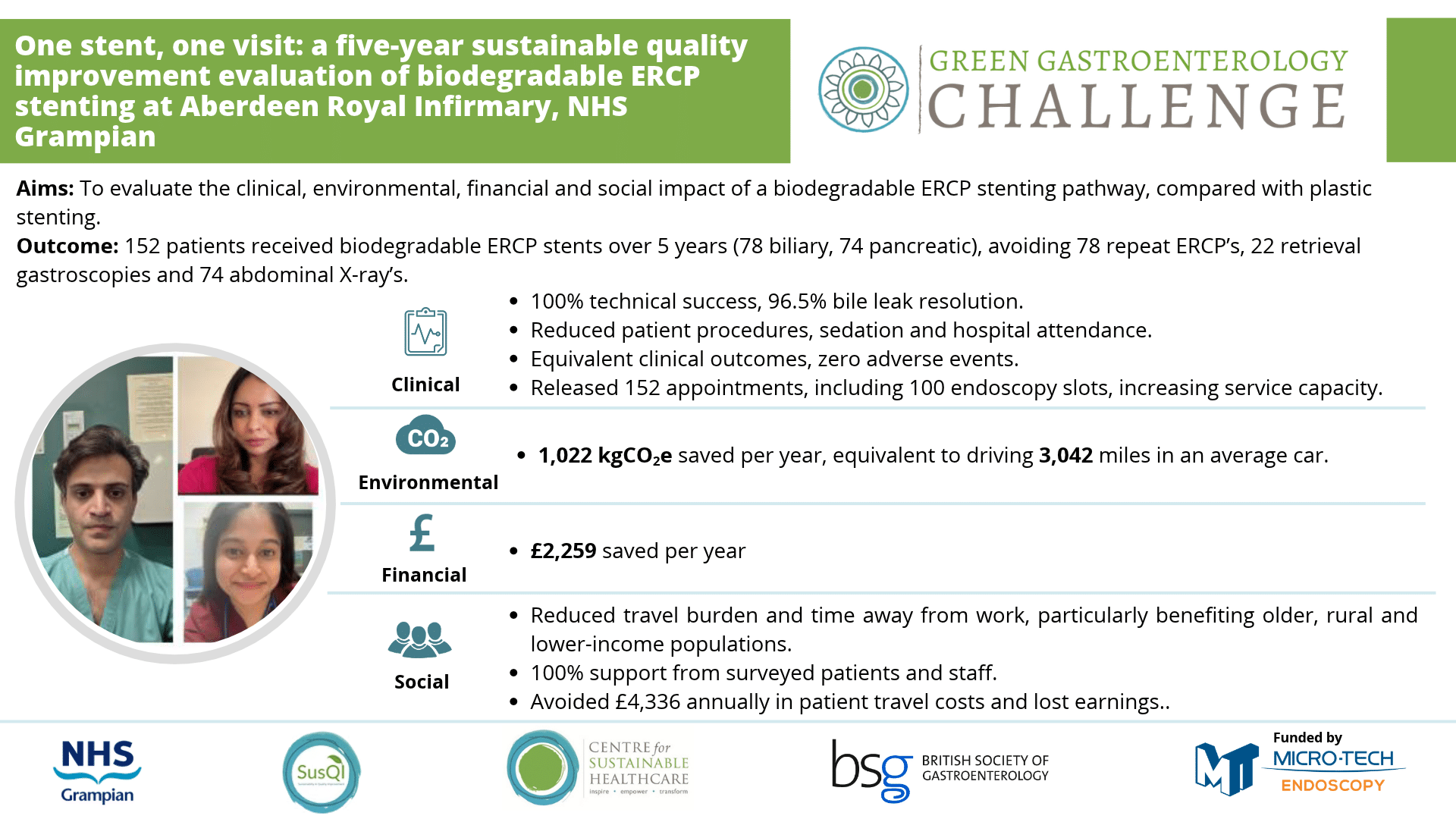
One stent, one visit: a five-year sustainable quality improvement evaluation of biodegradable ERCP stenting
Aberdeen Royal Infirmary evaluated a biodegradable ERCP stenting pathway against plastic stenting, which removes the need for a second procedure to retrieve the stent. Over five years, 152 patients received biodegradable stents (78 biliary and 74 pancreatic). This avoided 78 repeat ERCPs, 22 retrieval gastroscopies and 74 abdominal X-rays. Clinical outcomes were equivalent, with 100% technical success and 96.5% bile leak resolution. Patients avoided an estimated £4,336 a year in travel costs and lost earnings, which particularly benefits older, rural and lower-income patients. The pathway released 152 hospital appointments, including 100 endoscopy slots. All surveyed patients (10/10), nurses (10/10) and doctors (2/2) supported it.
Impact: £2,259 and 1,022 kgCO2e saved per year.
“Being part of the Green Gastroenterology Challenge has been a truly rewarding experience. It brought us together as a team, allowing us to share ideas, learn from one another and look at our everyday practices differently. […] Winning was an unexpected bonus, but the teamwork, shared learning and experience made it truly special.”
Subita Suparmanian, Aberdeen Royal Infirmary
Read the report and case study in full below:
Newcastle Hospitals NHS Foundation Trust (Highly Commended)
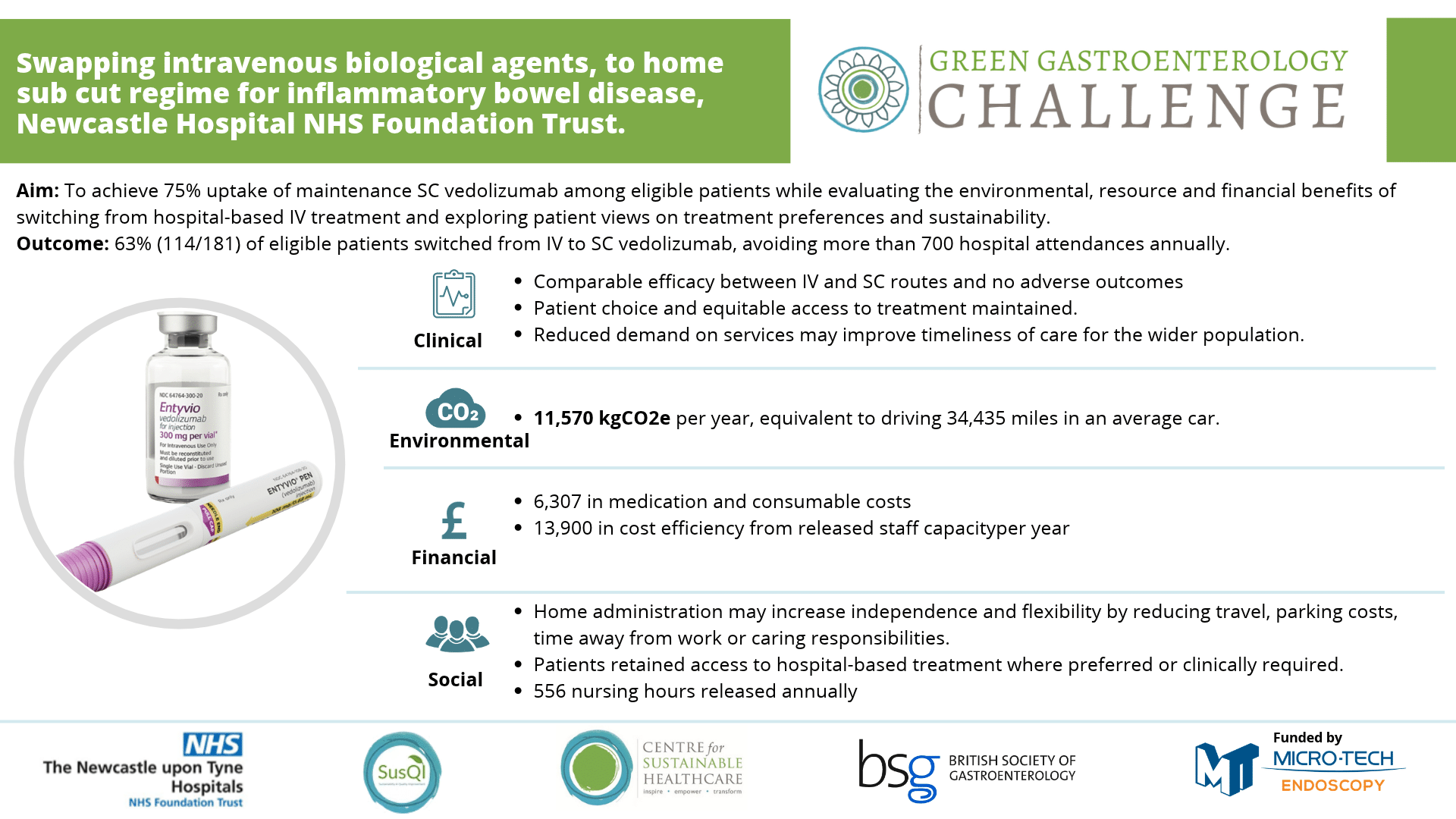
Swapping intravenous biological agents to a home subcutaneous regime for inflammatory bowel disease
The Newcastle team aimed to move eligible patients on maintenance vedolizumab from hospital-based IV infusions to home subcutaneous injections. They set a target of 75% uptake and explored patient preferences alongside the environmental, resource and financial benefits. By the end of the project, 63% (114 of 181) of eligible patients had switched, avoiding more than 700 hospital attendances a year and releasing 556 nursing hours. Efficacy was expected to be comparable, no clinical issues were identified, and patients kept the option of hospital-based treatment.
Impact: £20,207 in cost savings and efficiencies and 11,570 kgCO2e saved per year.
Read the report and case study in full here:
NHS Highland (Highly Commended)
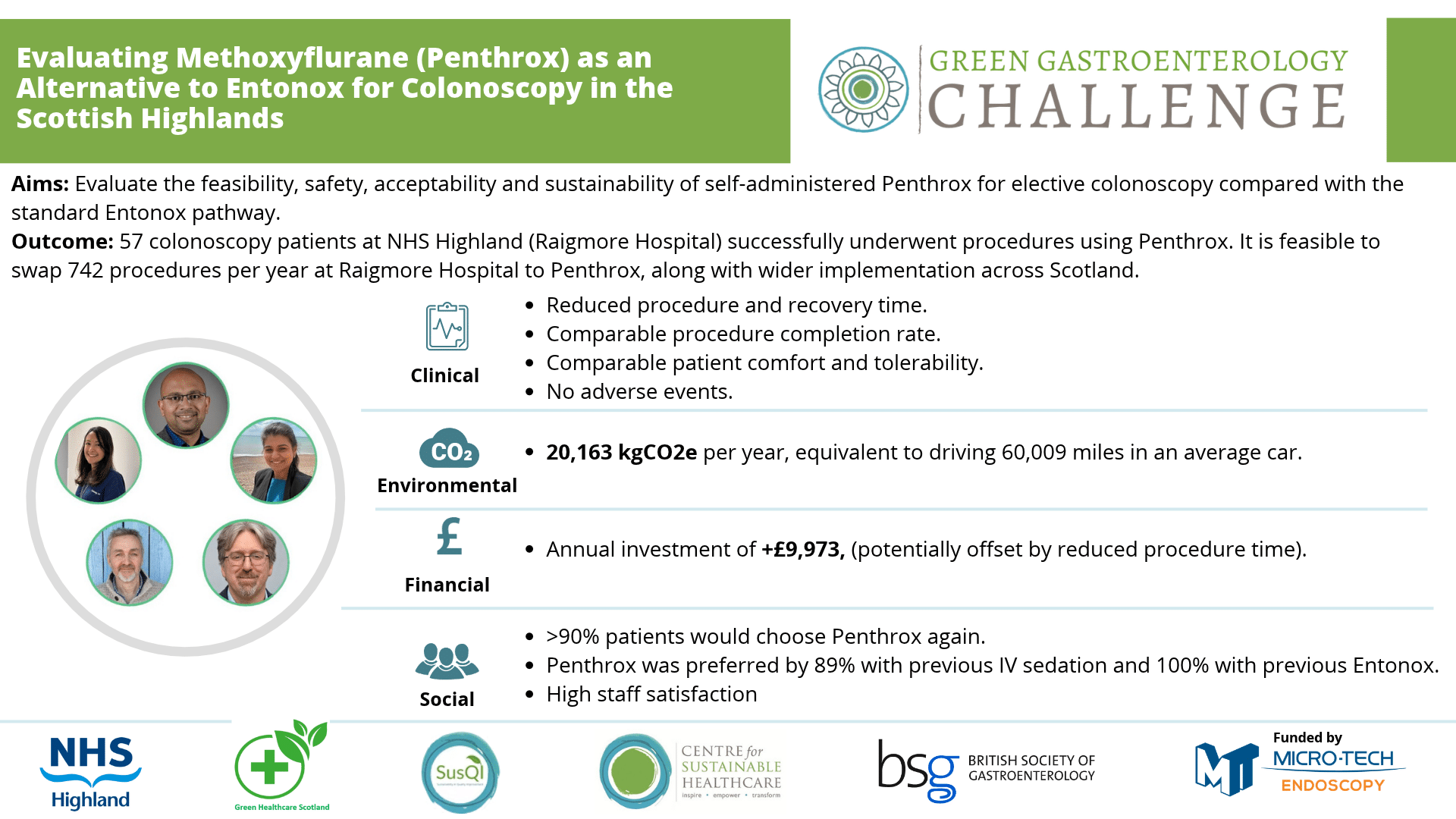
Evaluating methoxyflurane (Penthrox) as an alternative to Entonox for colonoscopy in the Scottish Highlands
The team at Raigmore Hospital, Inverness evaluated self-administered Penthrox for elective colonoscopy against the standard Entonox pathway. Fifty-seven patients completed their procedures with Penthrox. Completion rates and patient comfort were comparable, there were no adverse events, procedure time fell by 2.3 minutes and recovery time by 3.2 minutes. More than 90% of patients would choose Penthrox again, and 89% of those with previous IV sedation preferred it. The team estimates it is feasible to swap 742 procedures a year at Raigmore, with potential for wider use across Scotland.
Impact: 20,163 kgCO2e saved per year, with an annual investment of £9,973 that may be offset by reduced procedure time.
Read the report and case study in full here:
North Cheshire and Mersey NHS Foundation Trust
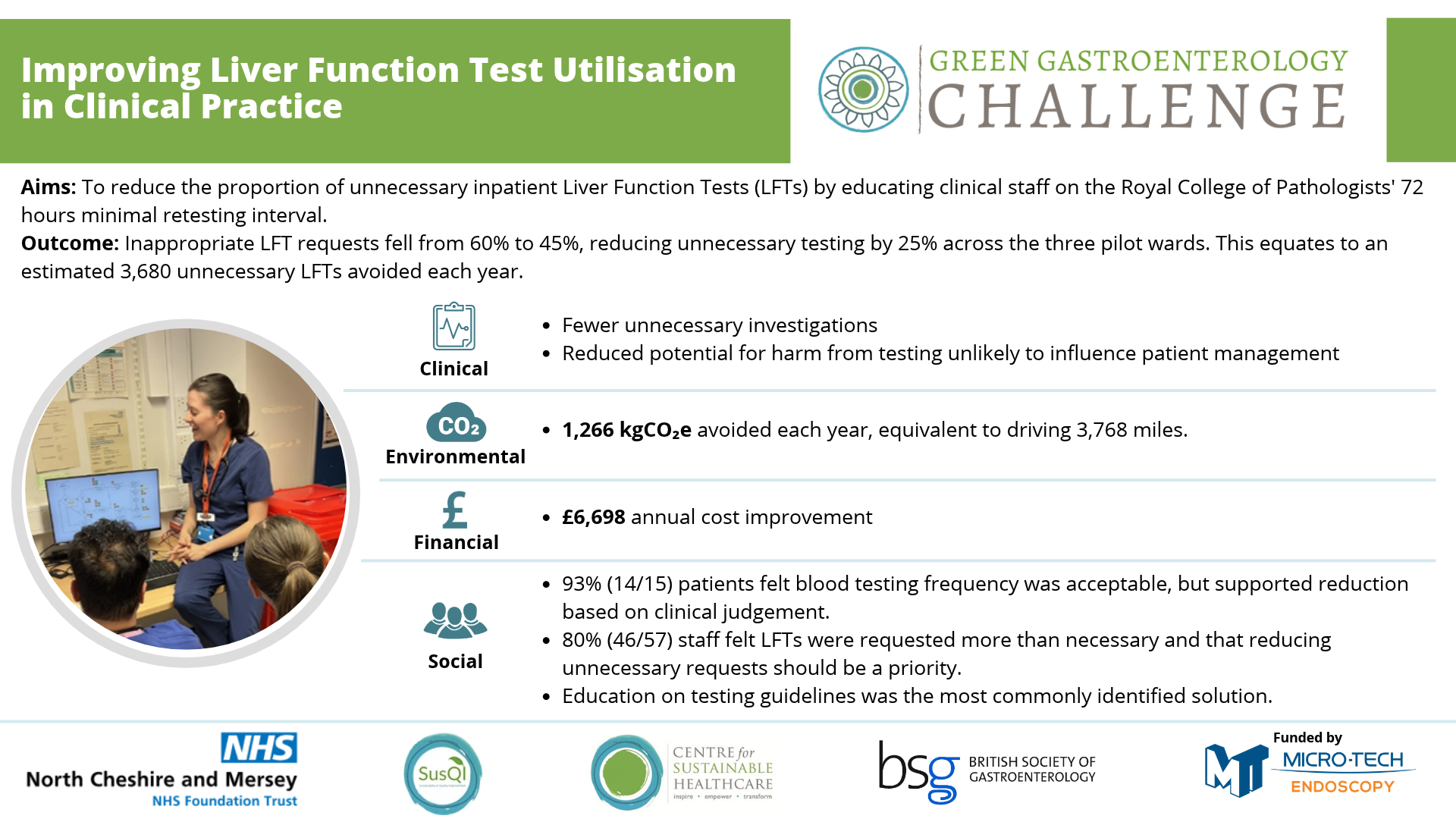
Reducing unnecessary liver function testing
The team tackled repeat liver function tests on inpatient wards that had no clear clinical justification. Across three pilot wards, unnecessary testing fell by 25% (3,680 tests). Staff strongly supported the change, with 80% (46 of 57) saying LFTs were requested more than necessary. Of the patients surveyed, 93% (14 of 15) found their testing frequency acceptable but supported reducing it where clinically appropriate. Education on testing guidelines was the most commonly identified solution.
Impact: £6,698 and 1,266 kgCO2e saved per year.
Read the report and case study in full here:
Barnsley Hospital NHS Foundation Trust
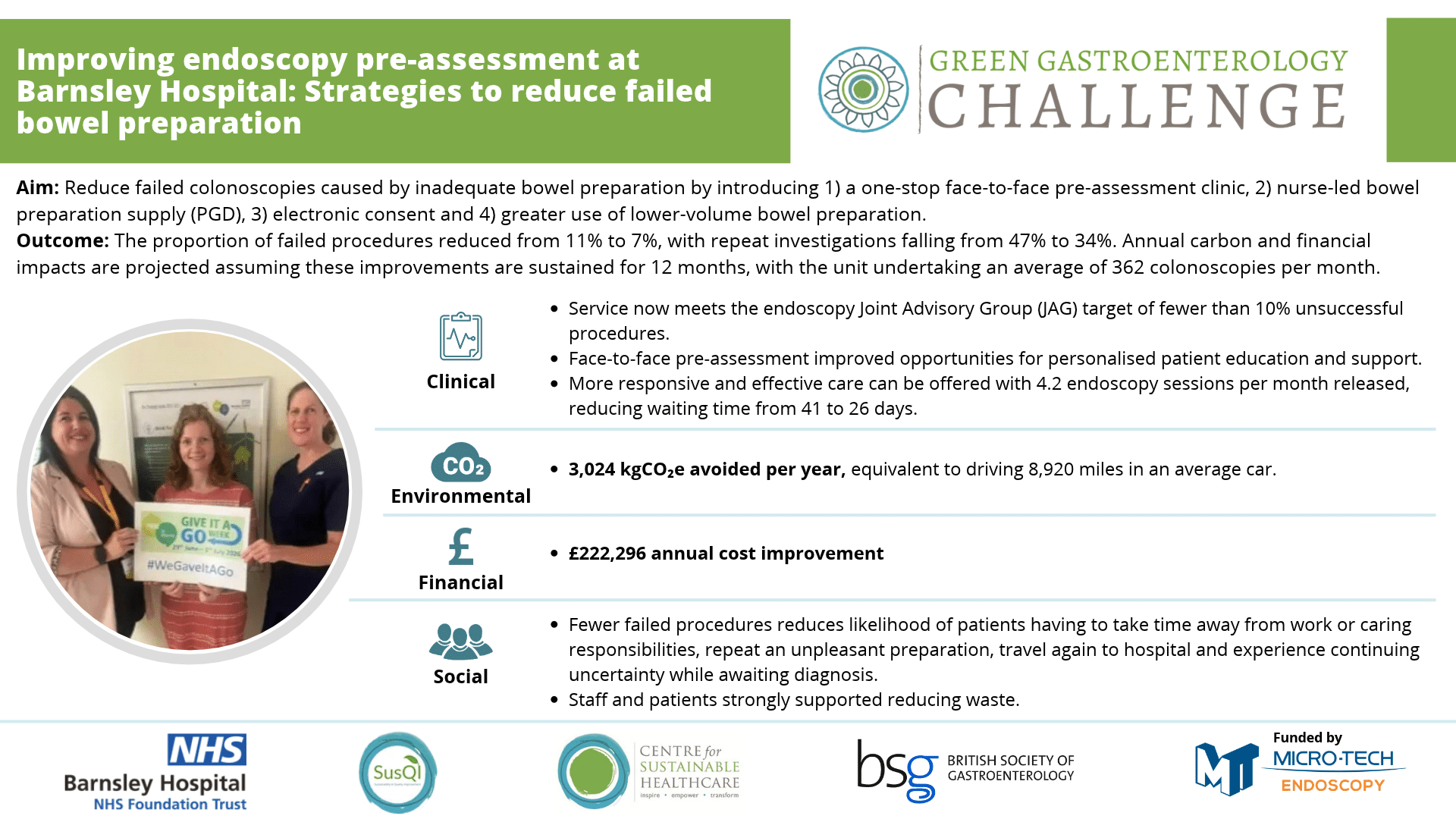
Improving endoscopy pre-assessment: strategies to reduce failed bowel preparation
The Barnsley team reduced the rate of failed lower GI procedures, which cause wasted resources, repeat bowel preparation and extra patient travel. Failed procedures fell from 167 (11%) to 64 (7%), so the service now meets the JAG target of fewer than 10% unsuccessful procedures. Face-to-face pre-assessment gave more opportunity for personalised patient education. The change releases 4.2 endoscopy sessions a month and has cut waiting times from 41 to 26 days.
Impact: £208,407 and 3,024 kgCO2e saved per year.
Read the report and case study in full here:
Practice Plus Group
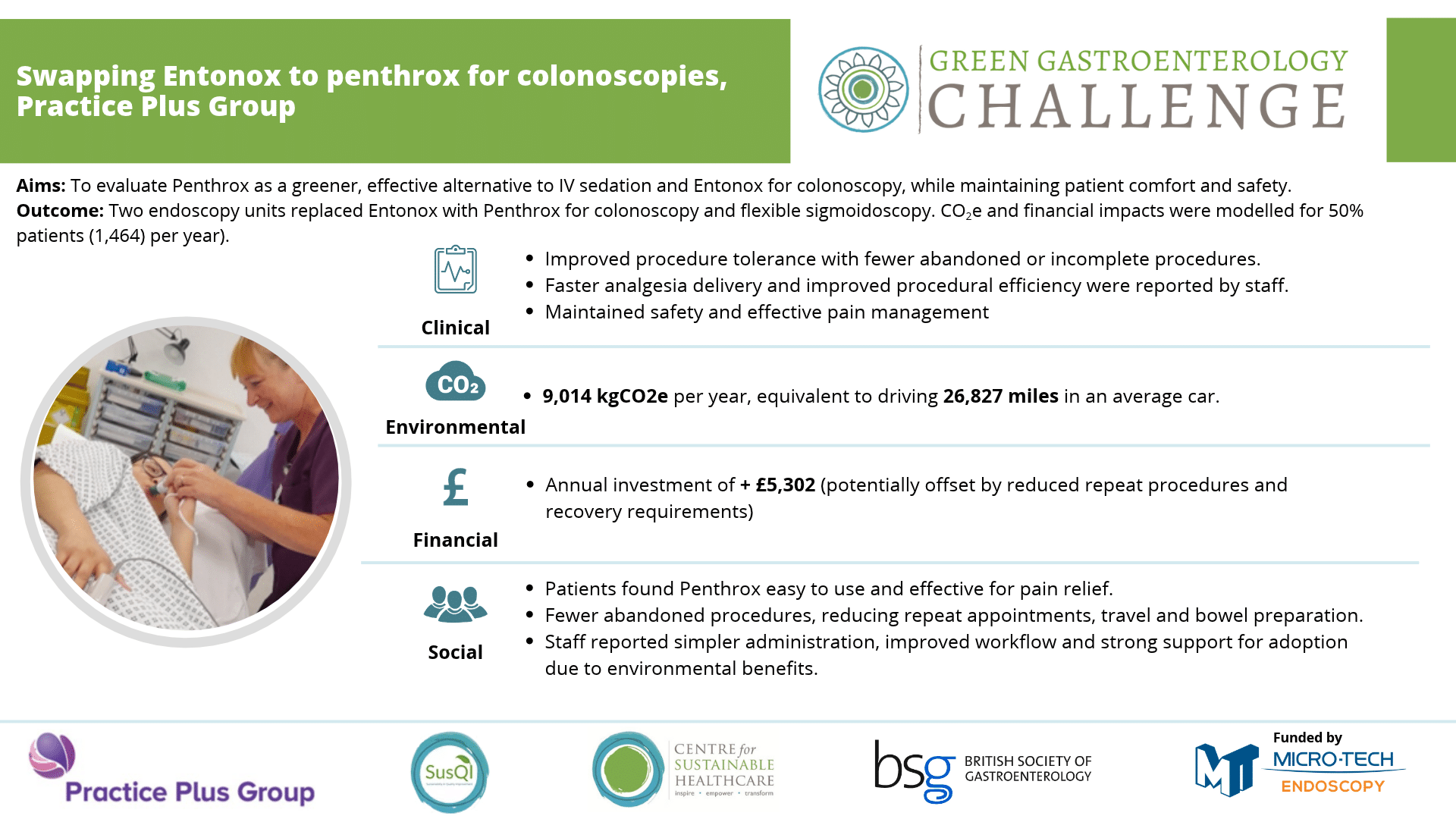
Swapping Entonox to Penthrox for colonoscopies
Two Practice Plus Group endoscopy units replaced Entonox with Penthrox for colonoscopy and flexible sigmoidoscopy. Patients found it easy to use and effective for pain relief, and staff reported easier administration and improved workflow. Fewer abandoned or incomplete procedures help patients avoid repeat appointments, travel and further bowel preparation. Impact is modelled for 50% of patients (1,464 a year).
Impact: 9,014 kgCO2e saved per year, with an annual investment of £5,302 that may be offset by reduced repeat procedures and recovery needs.
Read the report and case study in full here:
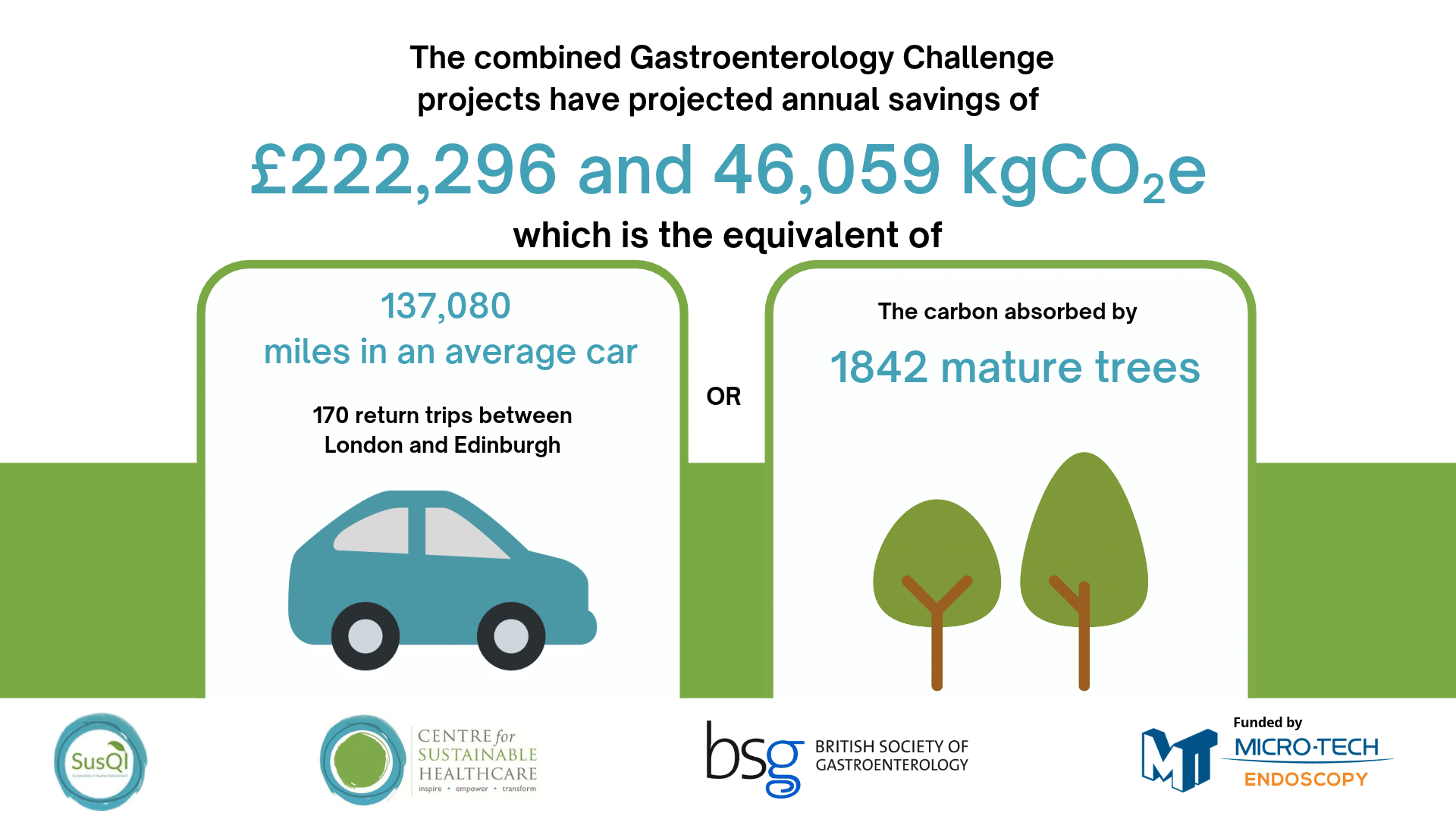
The combined impact of the Challenge is projected annual savings of £222,296 and 46,059 kgCO2e, equivalent to the carbon absorbed by 1,842 mature trees or 170 return trips between London and Edinburgh in an average car. A full impact report can be viewed or downloaded here.
Next steps
The BSG encourages all participating teams to submit abstracts to BSG LIVE 2027, to present in the sustainability symposium and nurses committee. Teams are also encouraged to connect with their organisation’s sustainability, improvement and management teams to spread suitable projects to other areas.
To go back and read more about the whole project, visit our dedicated project page.