‹ Go back
CSH’s Take on the National Emergency Briefing
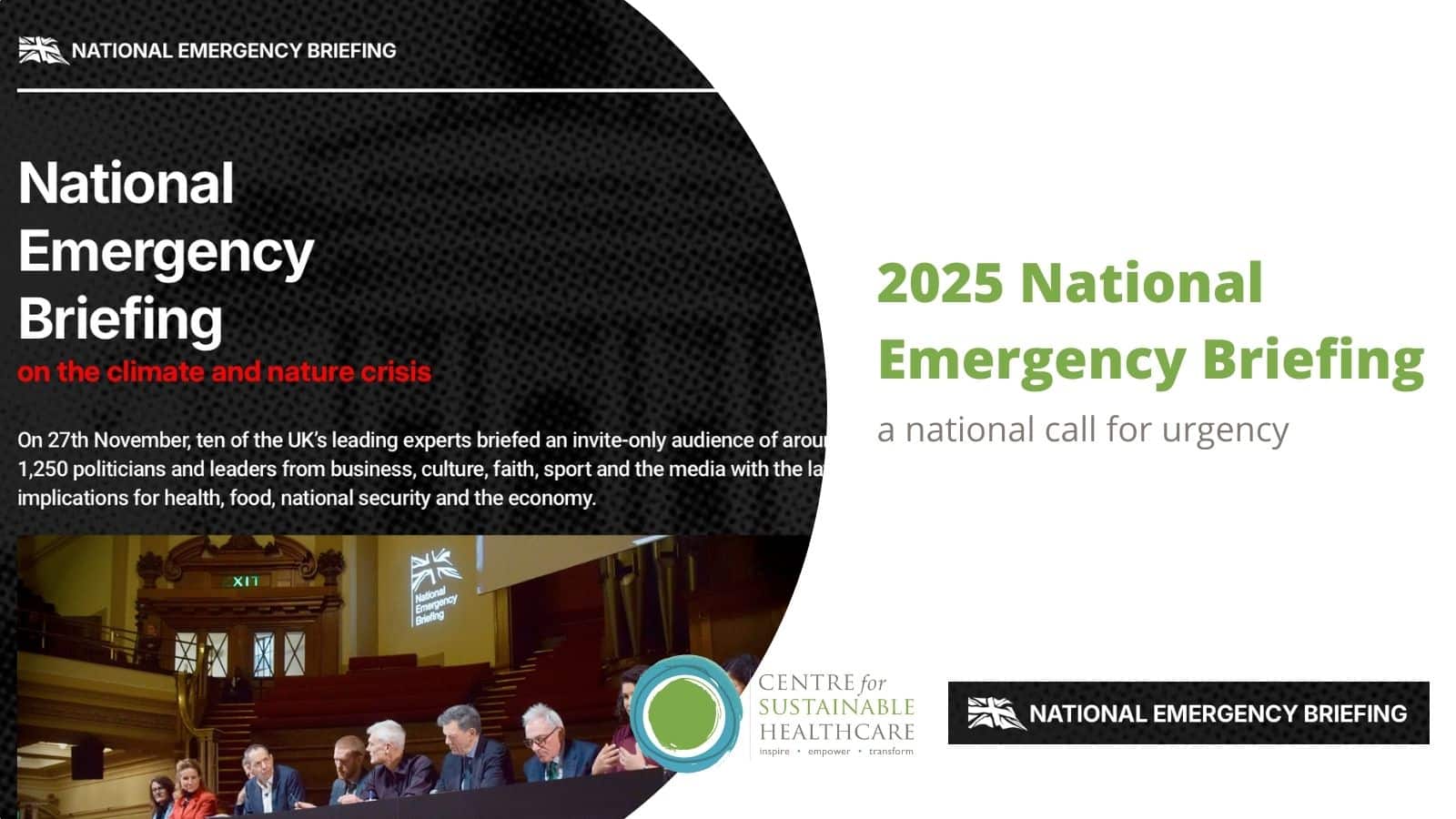
At the end of November, a significant moment took place in Westminster. Ten of the UK’s most respected experts on climate, nature, health, security and the economy gathered to deliver what was described as the country’s first national emergency-style briefing on the climate and nature crisis. Around 1,250 invited attendees — including MPs, members of the House of Lords, and senior figures from the media, business, faith, culture and civil society — heard directly from scientists about the escalating risks facing the UK and the scale of action now required.
A national call for urgency
The National Emergency Briefing called for a level of urgency comparable to wartime mobilisation, with experts outlining the consequences of inaction and urging the government and broadcasters to communicate the situation clearly to the public. A letter was read aloud calling for a televised emergency broadcast, and many attendees, parliamentarians included, expressed strong support for immediate, transparent communication.
Representing the Centre for Sustainable Healthcare (CSH), Lucy Brown, our Development Director, and Chris Naylor, our Policy Lead, attended the event. Below, they share their notes and reflections on what the briefing means for healthcare, for public wellbeing, and for the UK’s future. Their insights frame the discussion that follows, because what happens next will shape the health of the UK for generations.

“The latest evidence shows that climate change is already hitting household finances and public health in the UK. The choice for the government is simple: a planned transition to a sustainable economy now, or a chaotic one in the years ahead.”
Chris Naylor, Policy Lead at the Centre for Sustainable Healthcare
Why this briefing matters for health
The message from the National Emergency Briefing was stark: the climate crisis is already a health crisis. For the NHS and for those working in health and care, the risks are not abstract or distant — they are already landing in clinics, hospitals and communities.
The key climate milestones outlined were sobering:
- 1.5°C of warming likely within 3–5 years
- 2°C by mid-century increasingly probable
- A trajectory towards 3°C or more, risking widespread economic disruption and threatening billions of lives globally
This level of warming would fundamentally reshape the conditions in which the UK population lives, works and ages, with profound consequences for health and health services.
Climate change: a public-health emergency
Speakers highlighted the immediate health implications of a rapidly warming world. These include:
- Growing levels of chronic respiratory disease
- Dangerous heat exposure
- Rising mental health strain
- Food and water insecurity
- Increasing pressure on NHS services already stretched to capacity
These impacts echo the findings of the Lancet Countdown 2025, which warned that climate change is already undermining global health and pushing systems to the edge.
Prof Hugh Montgomery emphasised that decisive climate action brings major health benefits:
- A shift to active travel could save the NHS £17bn per year within two decades
- Supporting healthier, sustainable diets would help address the UK’s £126bn per year obesity burden
The conclusion was clear: tackling climate change is one of the most effective health interventions available.
A crisis touching every part of UK life
What became overwhelmingly clear during the briefing is that climate change is destabilising multiple systems simultaneously, all with real, uneven health impacts.
Food systems
Food emerged as one of the most immediate pressure points. As Prof Paul Behrens explained, the UK’s food system is already feeling the strain of a rapidly changing climate. Extreme weather, from heatwaves to flooding, has become a major driver of rising food prices, contributing to around a third of recent food inflation. This is happening at a time when the UK relies heavily on imports, with nearly half of all food coming from abroad and around a quarter sourced from the Mediterranean, one of the regions most vulnerable to climate stress.
These realities translate directly into people’s daily lives and diets. Rising prices and unstable supply chains hit the most financially stretched households first, shaping nutrition, wellbeing and long-term health.
Key points:
- Low-income households are disproportionately affected
- Around one-third of UK food inflation is linked to extreme weather
- 46% of UK food is imported; 25% comes from the climate-stressed Mediterranean
Energy, affordability and the economy
Energy was another area where the link between climate and everyday life became uncomfortably clear. Tessa Khan highlighted how deeply the UK’s dependence on fossil fuels has shaped its economic stability over the past half-century. Many of the country’s recessions since the 1970s were triggered by spikes in fossil fuel prices, and the recent surge in inflation would have been markedly lower if the UK had transitioned earlier to clean, renewable energy.
When energy becomes unaffordable or unreliable, it quickly becomes a health issue, affecting whether homes are warm and dry, whether households can meet basic needs, and whether communities can withstand further economic shocks.
Key points:
- Energy insecurity directly affects health and living standards.
- Around half of UK recessions since the 1970s were linked to fossil fuel price spikes
- Inflation would have been significantly lower with earlier decarbonisation
National security
The conversation also turned to national security, an aspect often overlooked in climate discussions. Lt Gen Richard Nugee warned that climate-driven shocks such as food price spikes, infrastructure damage and disrupted supply chains could trigger civil unrest and weaken public trust in democratic institutions. The risks are compounding and interconnected: a disrupted harvest affects food prices; food prices affect social stability; instability affects governance and public health.
The overarching message was unmistakable: we cannot address climate risks one sector at a time. The impacts cross every boundary we currently draw.
Key points:
- Climate action cannot be siloed, because climate impacts aren’t
- Climate shocks could fuel civil unrest and destabilise democratic systems
- Disruptions to food, energy and infrastructure feed into each other
Disinformation: a growing threat to public health
Another strong theme running through the briefing was the escalating threat posed by climate and nature disinformation. Speakers warned that the public is increasingly exposed to confusing or misleading claims that distort the science and downplay the urgency of the crisis. This misinformation doesn’t exist in a vacuum, it shapes perceptions, fuels uncertainty, and ultimately slows the action needed to protect health and wellbeing.
Disinformation has real consequences. It can:
- delay essential action
- undermine public trust in institutions and experts
- heighten existing health risks
- deepen political and social polarisation
The panel stressed the need for clear, consistent, science-based communication from government and public broadcasters. In a climate where trust is fragile, the role of organisations like CSH — independent, evidence-led and grounded in frontline experience — becomes even more vital.
What needs to happen next
From a health perspective, the briefing made the next steps unmistakably clear. The UK has the evidence, the public support, and the tools required, what’s missing is coordinated, determined action. For the health sector and for policymakers, the priorities fall into several areas.
A. Strengthen climate–health communication
First, communication must improve. People need clear, trustworthy information about how climate and health are connected, and about the solutions already available. This means consistent, science-led messaging from government and broadcasters, and better support for healthcare workers who are often the most trusted messengers.
- Clear, science-led messaging from government and media
- Better support for healthcare professionals to speak confidently about climate and health
B. Protect the most vulnerable
Second, action must prioritise those most at risk. Climate change doesn’t affect everyone equally; vulnerable households and communities are already experiencing the sharpest impacts.
- Improve access to clean air
- Support resilient, affordable housing
- Safeguard and expand green space
- Ensure healthy, affordable food options
- Promote safe and fair working conditions
C. Make healthcare part of the climate solution
Third, healthcare itself has a vital role to play in the transition. The NHS is both affected by and contributing to climate change, and with the right leadership and investment, it can become a powerful driver of solutions.
- Expand low-carbon clinical pathways and sustainable models of care
- Invest in green infrastructure and nature-based interventions
- Build NHS resilience to extreme weather and supply chain shocks
- Provide strong leadership from DHSC to unlock efficiency savings from sustainable technologies
D. Put health at the heart of all climate policy
Finally, health must be considered across all areas of policymaking. Climate policy is health policy and decisions around food, transport, housing and energy all shape the health of the population. Apply a “Health in All Policies” approach across:
- Food
- Planning
- Transport
- Energy
- Housing
Together, these actions create a path that protects health, strengthens communities and supports a fair, sustainable transition. And importantly, they demonstrate that the solutions already exist, what’s needed now is the will to implement them.
How CSH can support the transition
As the briefing made clear, the health sector has a crucial leadership role to play in responding to the climate and nature emergency. At CSH, we are committed to helping the system rise to this challenge, not in theory, but in practice. Our work is designed to bridge the gap between evidence and real-world change, supporting healthcare professionals and organisations to take confident, meaningful action.
- Training & Education – equipping clinicians, managers and leaders with the knowledge and skills needed to embed sustainability into day-to-day care. Through our courses, networks and programmes, we help individuals understand the links between climate and health and empower them to lead change within their teams and organisations.
- Research & Evidence – translating complex climate and health data into clear, practical insights that decision-makers can use. Whether analysing the co-benefits of sustainable practice or highlighting the health impacts of environmental degradation, our research ensures that policy and clinical decisions are grounded in solid evidence.
- Tools & Support – from greener clinical pathways to Net Zero planning, procurement guidance and practical sustainability toolkits, we provide hands-on support to help healthcare organisations turn ambition into action. Our resources are designed to be usable, scalable and directly applicable to the realities of healthcare delivery.
- Partnerships – working collaboratively with government, NHS organisations, community groups, charities and academic institutions. These partnerships help embed sustainable practices across the system, build momentum and ensure that climate–health considerations become a core part of how care is planned, delivered and evaluated.

“We now need collective action across every sector. At CSH, we are here to support everyone working in healthcare through this transition — helping them use our expertise and resources to lead the change we so urgently need.”
Lucy Brown, Development Director at the Centre for Sustainable Healthcare
At CSH, we are not simply identifying the problems, we are working every day to help implement the solutions. The health sector has enormous potential to drive positive change, and we are committed to supporting it at every step of that journey.
A moment for leadership
The National Emergency Briefing delivered an unmistakable message: climate inaction is a direct and growing threat to public health. Strong leadership is needed, across politics, healthcare, media, industry and civil society. CSH remains committed to helping the health sector drive this transition, championing evidence-based solutions that safeguard both people and the planet.
The evidence is clear, and so is the opportunity.