
‹ Go back
Green Nursing Challenge 2025: celebrating a transformative 15 week journey
The Green Nursing Challenge 2025, delivered by the Centre for Sustainable Healthcare (CSH) and fully funded by Micro-Tech UK, brought together nursing teams across the UK to lead the next generation of sustainable change in healthcare. In partnership with the Queen’s Institute of Community Nursing and the Foundation of Nursing Studies, the programme supported six teams through a structured 15-week journey, helping them design, test and evaluate Sustainable Quality Improvement (SusQI) projects that improve care whilst reducing environmental impact.
The programme culminated in the Green Nursing Showcase on 20 October 2025, where teams presented their work to a national judging panel and a public audience. What followed was a celebration not only of individual projects, but of a wider movement in nursing leadership, value-based care and climate-resilient healthcare.
Over the course of the programme, Angela Hayes, CSH’s Nurse Fellow and Project Lead, described how the past four months had felt both intense and deeply rewarding for everyone involved. She saw first-hand the determination with which the six nursing teams applied the SusQI approach, testing ideas, refining pathways and building evidence for more sustainable models of care. Angela emphasised how striking it was to see such progress made in such a short period of time, especially alongside participants’ already demanding clinical responsibilities. For her, the teams’ creativity, resilience and commitment stood out as the true markers of success.

“It is so exciting to see these projects, outcomes and insights being shared so openly, because I know they will inspire many more nursing teams to take on their own SusQI projects. This is how change spreads: one team demonstrating what’s possible, and others realising they can do it too.”
Angela Hayes, CSH’s Nurse Fellow and Project Lead, the Centre for Sustainable Healthcare
Alongside this, she reflected on the excitement of seeing these projects presented publicly, knowing that the learning shared by one group often sparks new ideas in many others. The visibility of these outcomes, she suggested, is what ultimately fuels wider momentum for sustainable improvement.
Why the Challenge matters
The NHS has committed to reaching Net Zero emissions by 2040 (and including its supply chain by 2045). With nurses forming the largest professional group in healthcare, and holding deep insight into patient journeys and system pressures, they are uniquely positioned to lead sustainable transformation.
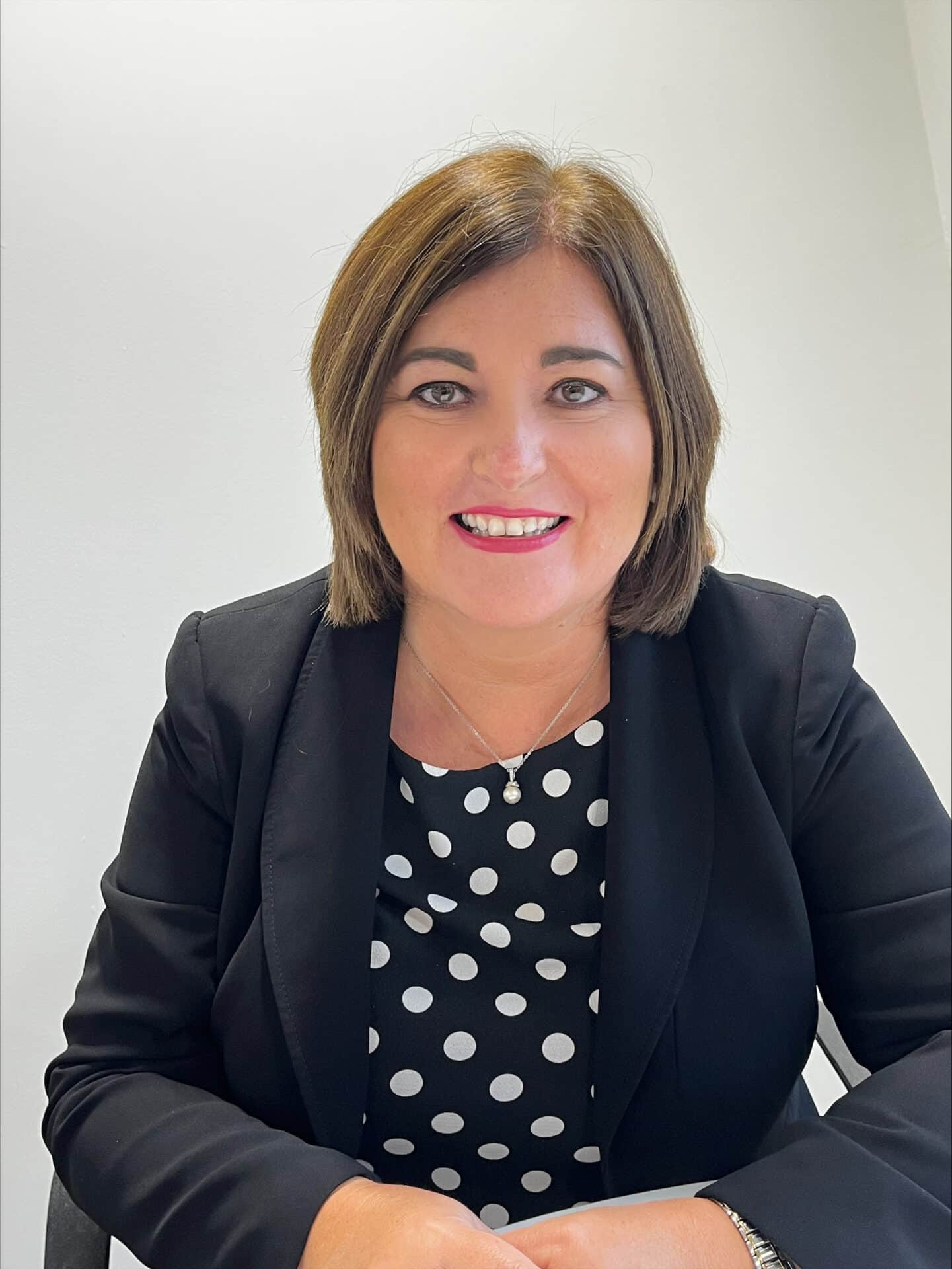
“Nurses and midwives for me have always been the holders of hope, the voice of the vulnerable, and the champions of change.”
Charlotte McArdle, Keynote Speaker at the Green Nursing Challenge Showcase 2025
The Green Nursing Challenge provides the tools, structure and mentorship to:
- redesign care pathways for high environmental and social value
- measure carbon, financial and patient experience impact
- build capability and confidence in sustainable service improvement
- connect nurses to a growing community of climate-focused healthcare leaders
This Challenge demonstrates that low-carbon care is often better care, more efficient, more person-centred, and more resilient.
Recognising the winning teams
Winners: Norfolk and Norwich University Hospitals NHS Foundation Trust
The winning team reshaped their integrated Maternity and Inflammatory Bowel Disease (IBD) clinic to streamline appointments, reduce duplication and create a more person-centred pathway. These changes demonstrated how integrated care not only reduces emissions but also improves access to specialists, enhances continuity and lowers pressure on stretched services.
“We hope that this model supports a sustainable, high value approach to care… and promotes timely access to specialist care to improve health outcomes. We’re really keen to replicate this for epilepsy in pregnancy as well… this definitely is, we feel, the way forward.”
Phillipa Noble, Norfolk and Norwich University Hospitals NHS Foundation Trust
Highly commended award: Oxfordshire Community Nursing – Planned and Preventative Care
This team introduced continuous blood glucose monitoring in the home to reduce avoidable hospital admissions and support earlier interventions.
“We feel this could be a really good way of starting our neighbourhood team working with a focus on this right around the county. We’re really proud of what’s been achieved so far and we’re encouraged by the early results.”
Gabrielle Parham, Oxford Health NHS Foundation Trust
Other participating teams
- Sheffield Teaching Hospitals NHS Foundation Trust: Trialling reusable kidney dishes to replace single-use plastics.
- Liverpool Heart and Chest Hospital NHS Foundation Trust: Standardising IV giving set hanging times and increasing oral medication use where clinically appropriate.
- Lewisham Community and Primary Care Team: Co-designing a structured ‘Trial Without Catheter’ pathway to reduce over-use and unnecessary hospital attendance.
- Birmingham Community Healthcare NHS Foundation Trust: Developing a digital triage tool to support people living with long-term conditions and reduce avoidable home visits.
The impact of the Green Nursing Challenge
The projects presented in the Green Nursing Challenge 2025 collectively contribute to:
- £860,669 annual cost and efficiency savings
- 101,263 kgCO2e reduced annually – equivalent to 298,367 miles driven OR Emissions equivalent to 778,978 disposable nappies prevented
- £691,844 annual cost and efficiency savings
- 77,398 kgCO₂e – equivalent to 227,708 miles driven in an average car or 284 trips between London and Edinburgh.
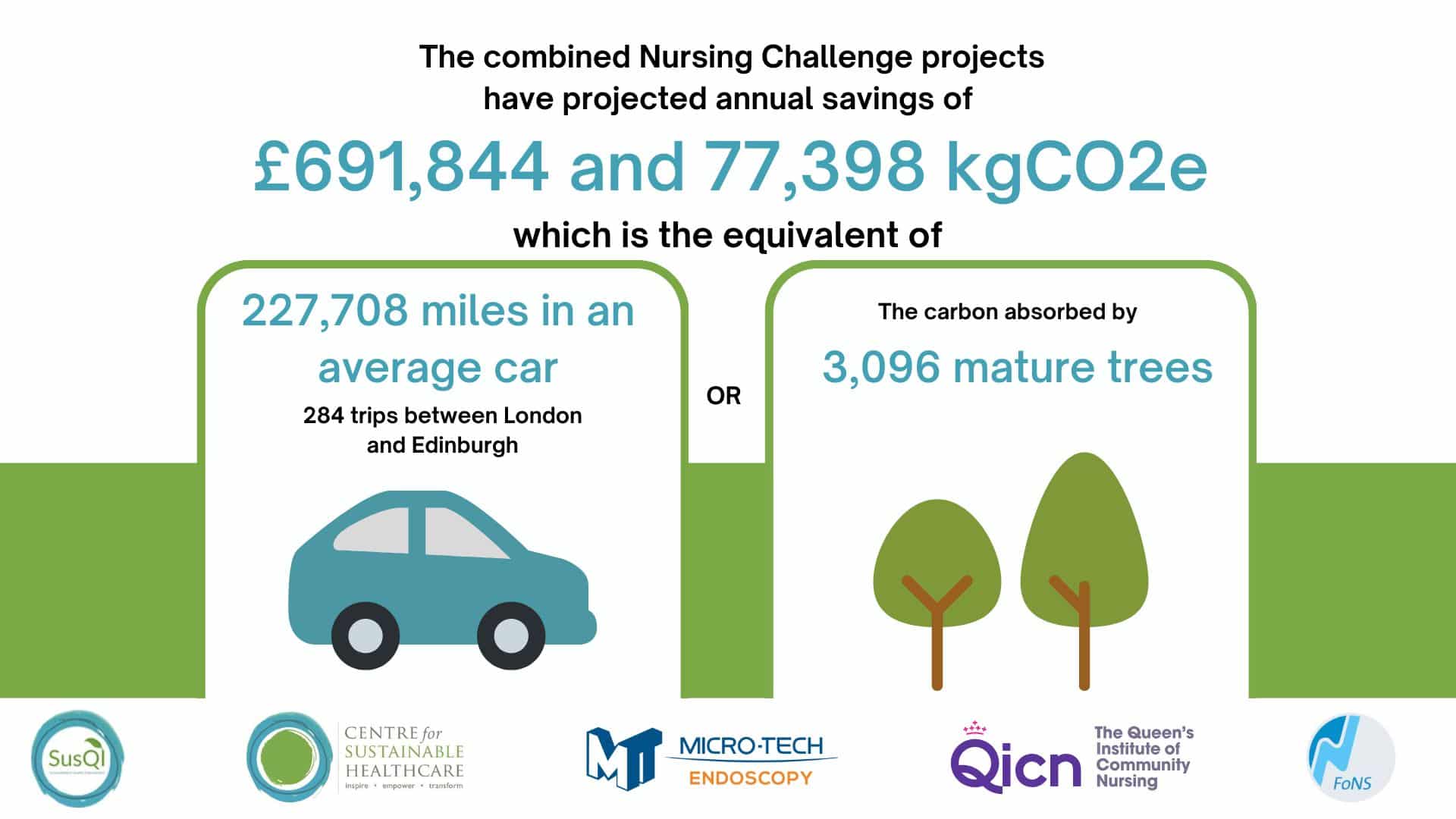
These figures reflect the power of frontline-led improvement: small, targeted changes within everyday practice can add up to substantial environmental and financial gains across the system.
Showcase recordings and detailed case studies will be available through the CSH Resource Library to help inspire and guide future projects.
Reflections from the Challenge

“Nurses are always innovative and see solutions to issues in practice which can really make a difference. I will certainly be sharing these projects everywhere I go.”
Dr Amanda Young, Judges Panel
Lessons learned
Across the six teams, several powerful lessons emerged:
- Cross-speciality collaboration breaks down silos and leads to higher value for patients and staff.
- Streamlined pathways reduce duplication and improve experience, outcomes and carbon impact.
- SusQI provides a shared technical language that keeps environmental and social outcomes in scope from the start.
- Protected time and structured mentoring are essential to making sustainable change achievable.
- Low-carbon care is often low-cost care, especially when inefficiencies are removed.
- Sustainable healthcare supports timely access to care, reducing escalation and improving health outcomes.
- SusQI projects are highly scalable, allowing teams to replicate and spread change across services and specialities.
Insights from participants
Teams repeatedly described the Challenge as energising, unifying and transformative. Many said it changed not only how they work, but how they think, giving them a shared language and a framework that puts environmental and social value on equal footing with clinical outcomes.
“From my perspective, this celebration has been a great opportunity to share what we have learnt from the project – the good, the bad and the unexpected! I am always keen to share learnings and to learn from others.”
Myra Robson, Clinical Lead – Bladder, Bowel and Pelvic Health team, Lewisham and Greenwich NHS Trust
A common theme was the power of engaging staff throughout the process. Involving colleagues at every step built trust, ownership and momentum, making change more meaningful and more durable. For many, the Challenge cultivated a sense of belonging to a national movement of sustainable nursing leadership and acted as the spark for future ambitions.
Leadership and support
Strong leadership played a central role in helping teams stay motivated and focused throughout the Challenge. Angela Hayes ensured participants felt supported at every stage, fostering an environment where ideas could be tested, refined and shared openly. The analytical dimension of the work was strengthened through the expertise of Inge Steinbach, Lead Sustainability Analyst at CSH, who guided teams in calculating the carbon impact of their interventions and translating this into meaningful, evidence-based value.
“It’s fantastic to be part of a project that is so in sync with sustainability and patient centred care. Hope we all made the SusQI team proud as they have been such a great support and we would probably still be thinking of the idea rather than making an impact without them.”
Jane Mullen, Matron at Liverpool Heart & Chest Unit Hospital
Despite the intensity of the process and the additional workload it required, participants frequently spoke about how much they appreciated the opportunity to step back from day-to-day pressures, collaborate across boundaries and shape improvements they felt truly proud of. For many, the experience strengthened their belief that sustainable change is both achievable and deeply worthwhile
A national perspective
There was a strong sense throughout the Showcase that the work presented would not stop with the six participating teams. The projects, insights and practical lessons resonated widely, demonstrating what is possible when frontline staff are empowered to lead. Many involved in delivering the programme expressed confidence that these examples will encourage other nursing teams to begin their own SusQI journeys, creating a ripple effect where each new project contributes to better outcomes for patients, staff and the environment.

“There are rare moments when I see the future of nursing unfold, and today I saw it within all of the projects.”
Dr Marion Lynch, Judges Panel
Members of the judging panel spoke about the Challenge as an exemplar of nursing-led innovation. They praised the teams’ analytical depth, their evidence-based methods and their ability to demonstrate measurable improvements in value, outcomes and carbon impact. For many, the projects represented a glimpse of the future of nursing: integrated, climate-aware, value-driven and led by staff who understand the realities of patient care.
“The quality of the projects surpasses anything I’ve seen, not just within nursing but in sustainable healthcare more broadly.”
Dr Jonathan Groome, Judges Panel
The importance of sponsorship
Programmes like the Green Nursing Challenge simply cannot exist without committed partners. Micro-Tech UK’s sponsorship made it possible for nursing teams to access high-quality training, protected time, mentoring and carbon analysis at no cost to themselves or their organisations.

“I’m just so honoured to be a small part in helping this happen. The quality of what these teams have been doing is absolutely phenomenal!”
Gareth Bullen, managing director Micro-Tech UK
By investing in frontline-led sustainability, Micro-Tech is helping to accelerate a national shift towards low-carbon, high-value care—one project, one team and one patient pathway at a time. Their support demonstrates how industry can play a meaningful role in climate-conscious healthcare transformation.
What’s Next?
This Challenge marks the beginning, not the end. Over the coming year, teams will embed their findings, evaluate long-term impact, and share their learning widely within their organisations and networks. Their case studies will be made available through the CSH resource library, enabling other nursing teams to adapt and scale proven models of sustainable care. With the Challenge now complete, CSH and its partners will continue to amplify and share this learning, supporting nursing teams across the NHS to adopt, adapt and scale proven approaches to low-carbon, high-value care.
Nursing-led sustainable improvement is not an optional extra, it’s central to delivering equitable, efficient and climate-resilient healthcare. The Green Nursing Challenge demonstrates that when nurses are given the tools, support and freedom to lead, they can redesign pathways that benefit people, the planet and the health system.

“Be bold, share it far and wide… you really are making a phenomenal impact.”
Lucy Brown, Judges Panel
The future of sustainable nursing leadership is already here, and nurses are shaping it.
Join our Nursing and Midwifery Sustainability Network
To stay informed on the latest case studies, research, and innovations in sustainable women’s health, join the Nursing and Midwifery Sustainability Network and connect with like-minded professionals.