‹ Go back
Hampshire Hospitals Green Team Competition 2026
19 October 2026
In May 2026, Hampshire Hospitals NHS Foundation Trust (HHFT) commenced a Green Team Competition in partnership with the Centre for Sustainable Healthcare, culminating in a Showcase event in October 2026 celebrating the achievements of clinical teams working to embed sustainability into everyday practice.
The Green Team Competition is a clinical leadership and engagement programme for NHS organisations wishing to improve the sustainability of their services. Through the programme, seven clinical teams at HHFT were supported by CSH to identify, plan, implement and measure quality improvement projects using the Sustainability in Quality Improvement (SusQI) methodology.
Project support and implementation
CSH has worked directly with clinical teams across HHFT on seven projects to support them in delivering greener, higher-value care through the application of the Sustainability in Quality Improvement (SusQI) methodology. By combining clinical insight with practical mentoring, teams were guided to explore how their services could improve health outcomes while reducing environmental and social costs. Using the sustainable value equation as a foundation, teams progressed to active project delivery, developing, implementing, and evaluating initiatives that bring meaningful, measurable change in line with wider sustainability goals.

Showcase Event
At the Showcase and Awards Event on 12 October 2026, the teams presented their projects, including the financial, environmental and social outcomes achieved, as well as opportunities for next steps.
This year’s competition saw teams across HHFT praised for the quality of their projects, the depth of their reporting and their commitment to improving care for patients while reducing environmental impact.
The Showcase event brought together colleagues from across the Trust, with judging by:
- Sue Harriman, Chief Executive, HHFT
- Amy Kerr, Lead Nurse Theatres, Transitional Care and Pre-assessment, HHFT
- Shirlene Oh, Chief Strategy and Population Health Officer, HHFT
- Mark Hainy, Head of Charity, HHFT
- Rachel McLean, Acting Transformation Director, CSH
Their insights helped recognise the projects that demonstrated significant, measurable improvements in patient care, staff experience and environmental outcomes.
The impact
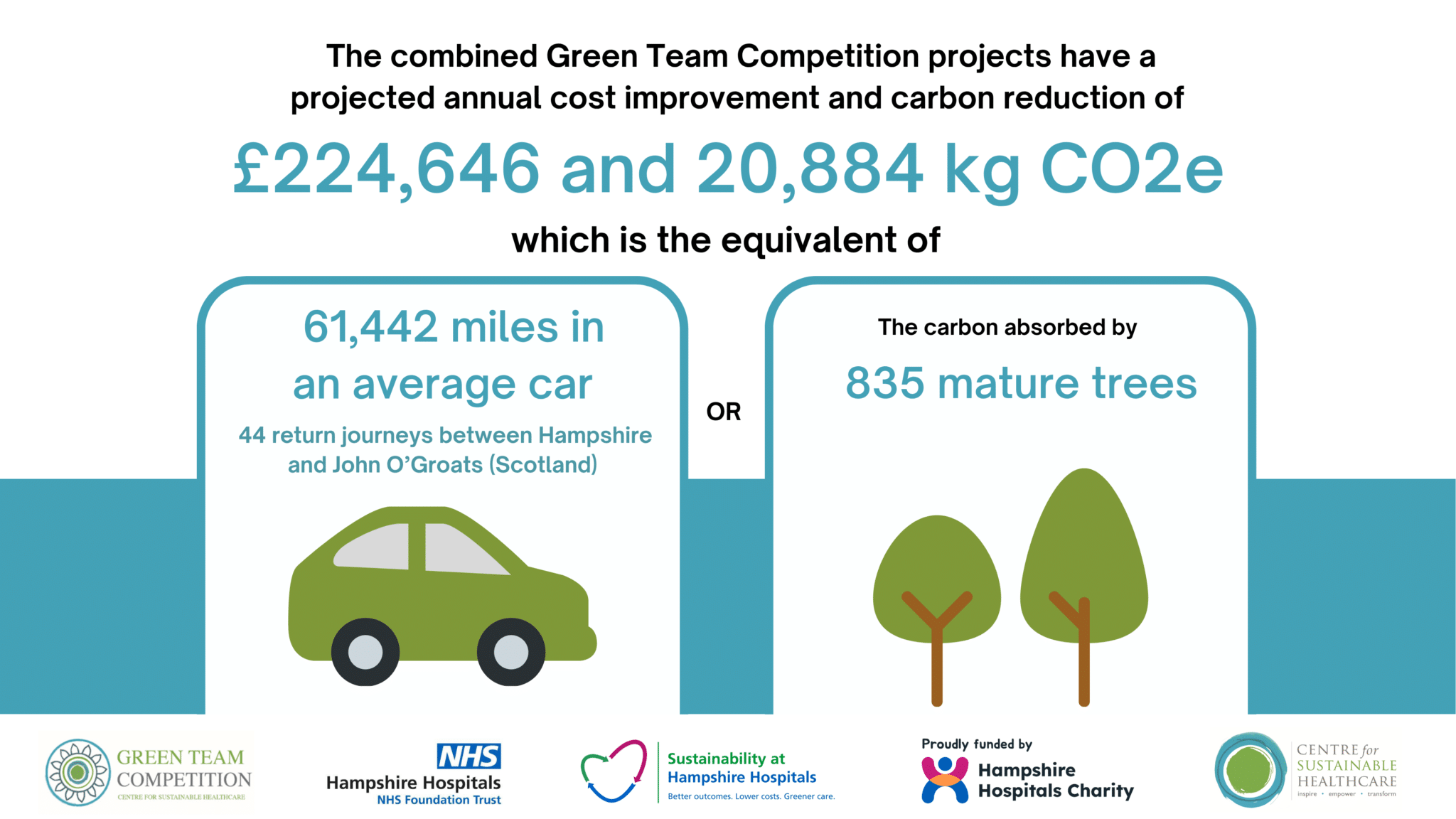
The Green Team Competition has brought meaningful, measurable value to HHFT. Collectively, the projects delivered through the competition are forecast to achieve £224,646 in annual cost savings and cut carbon emissions by approximately 20,884 kgCO₂e each year.
That’s the environmental equivalent of:
- Driving more than 61,442 miles in an average car
- Completing roughly 44 return journeys between Hampshire and John O’Groats
- The annual carbon absorption of around 835 mature trees
Beyond the figures, the programme has helped foster a growing culture of sustainability within clinical teams, inspiring more thoughtful, efficient and person-centred approaches to delivering care.
Sue Harriman, Chief Executive of HHFT
These early achievements highlight how locally driven, well-supported initiatives can contribute to the NHS’s net zero ambitions while enhancing patient outcomes and streamlining the way services are delivered.
Winners
Congratulations to the winning team, the Critical Care Team, Basingstoke
The judging panel praised the team for building engagement and enthusiasm among staff through simple, visible improvements — from recycling initiatives to medication administration interventions with direct clinical benefits. Through strong collaboration, effective use of quality improvement methods, and a focus on practical solutions, the team demonstrated how small changes can collectively deliver significant value for patients, staff, the organisation and the environment.
The team was awarded £2,000 to dedicate to ongoing and future sustainability efforts within their service.
“It was incredibly eye-opening to see the scale of impact across clinical, environmental, social and financial areas.”
Sophie Daniels, Deputy Sister ICU and Sustainability Lead in Critical Care, winning team
Green Team Competition projects
Read the full Impact Report here or view the project summaries below.
1. Critical Care Team, Basingstoke – IV to Oral Medicines, Enteral Feed Waste and Waste Segregation (Winners)
Team members: Sophie Daniels (Deputy Sister ICU, Sustainability Lead), Sonia Thapa, Sowmya Sajish, Luxmi, Sija Paul, Asha Cyriac, Rubina, Fred (Staff Nurses ICU), Lucy O’Beirne (Clinical Educator), Victoria Taylor (Critical Care Matron)
Setting / patient group: 18-bed intensive care unit, Basingstoke.
Summary
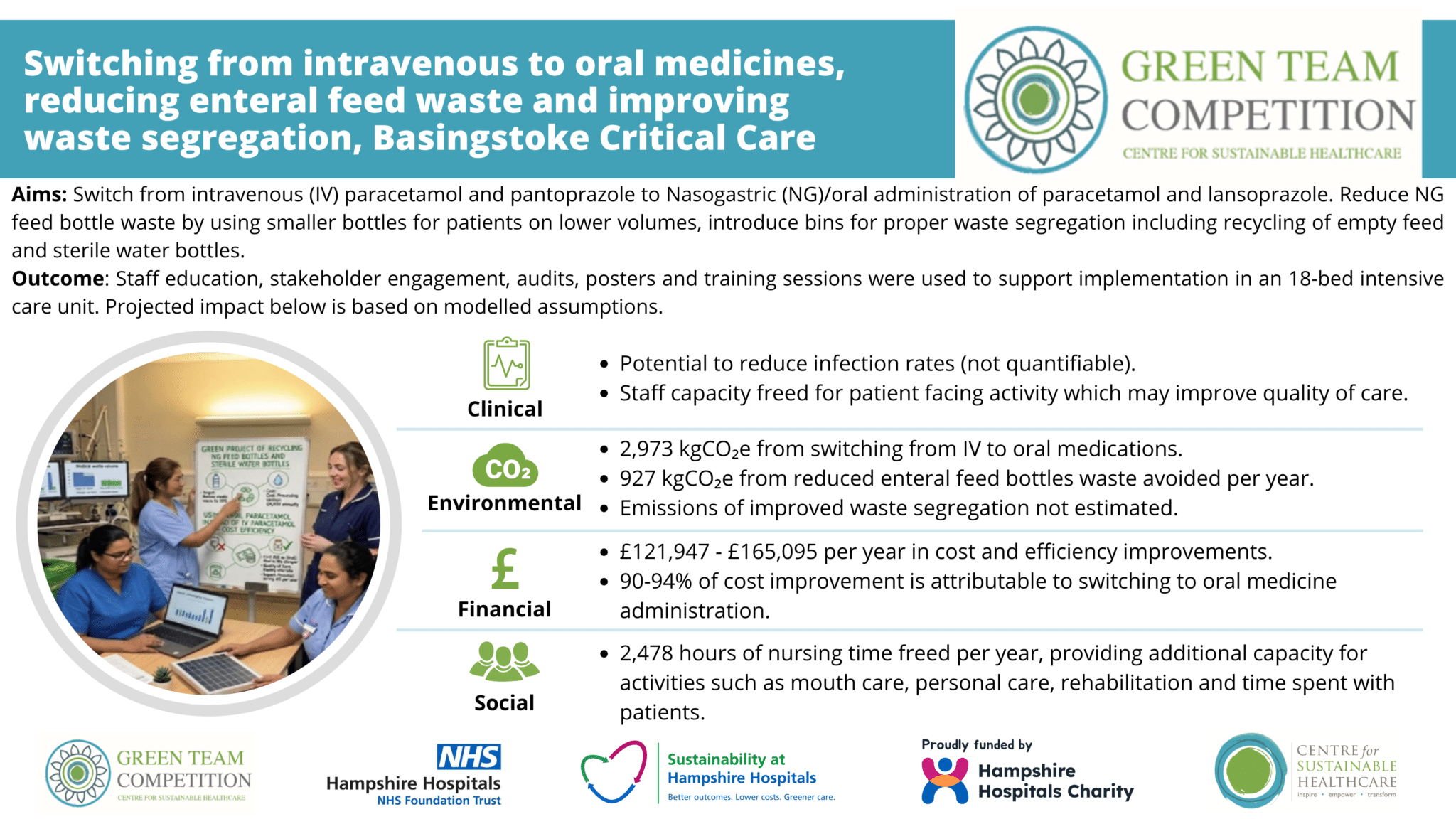
The team tackled multiple sustainability hotspots simultaneously — switching from intravenous to oral medicines where clinically appropriate, reducing enteral feed waste, and improving waste segregation. Through strong collaboration and effective use of quality improvement methods, the team built engagement and enthusiasm among staff, creating the foundation for lasting, practical change.
Outcomes
Financial savings are projected at £121,947–£165,095 per year (median £143,521), with environmental savings of 3,900 kgCO₂e per year. The project freed up an estimated 2,478 hours of nursing time per year, creating additional capacity for patient care activities including mouth care, personal care and rehabilitation.
Clinical benefits include increased time spent with patients and potential to reduce infection rates.
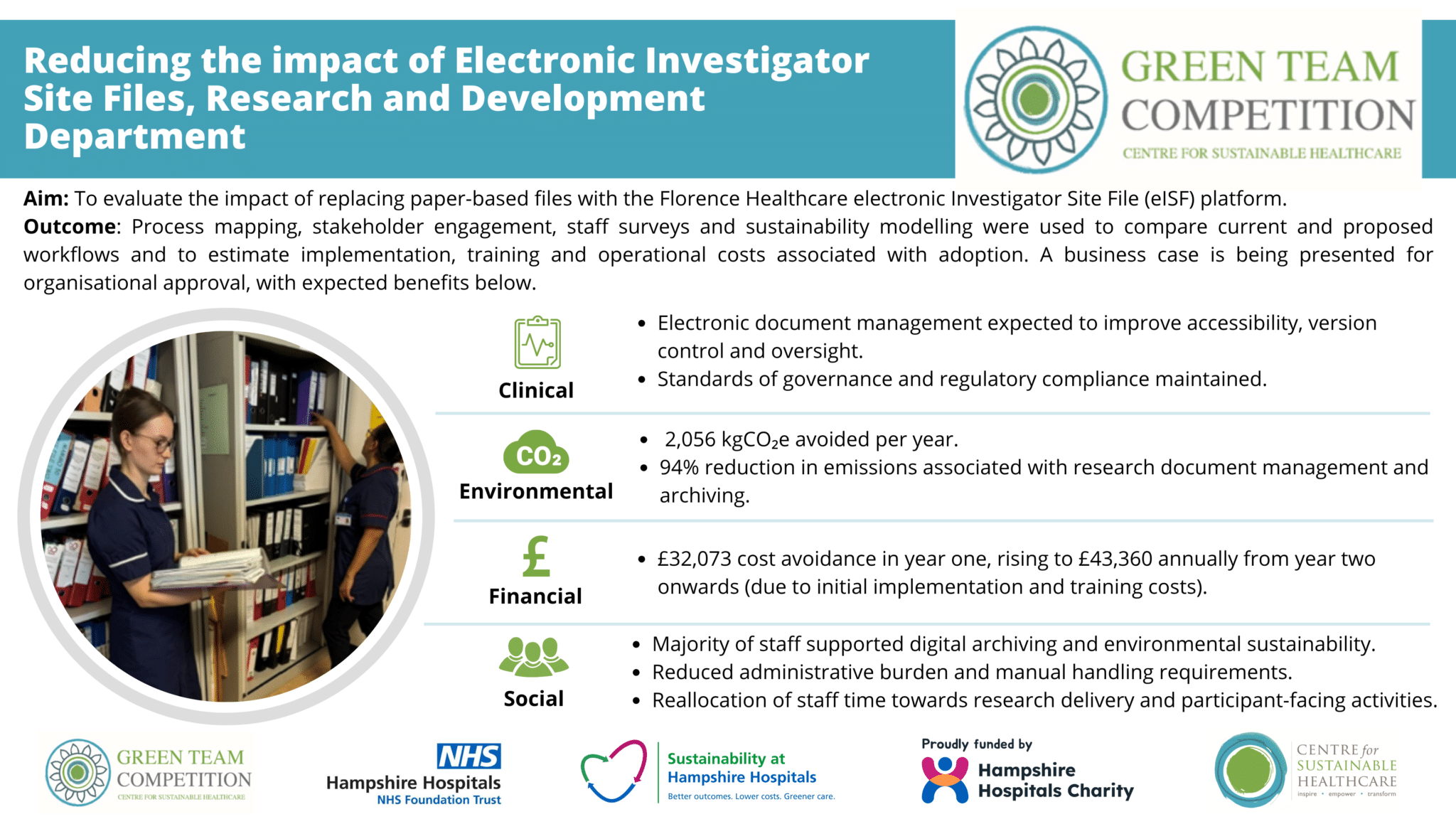
2. Research and Development Department – Reducing the Impact of Electronic Investigator Site Files
Team members: Cate Lee (R&D Governance Manager), Emma Levell (Senior Research Nurse, Surgical Division) and Hayley Cousins (Research Nurse, Medical Division).
Setting / patient group: Research and Development unit, HHFT.
Summary
The team worked to reduce the environmental and administrative impact of paper-based Investigator Site Files by transitioning to a digital archiving approach. Staff reported high levels of support for both environmental sustainability and digital working. The project is expected to increase in financial impact in year two as digital processes become embedded.
Outcomes
Financial savings of £32,073 per year (increasing in year 2), with environmental savings of 2,056 kgCO₂e per year. Digital archiving reduces administrative burden, improves document accessibility and supports more flexible approaches to monitoring and inspection readiness.
Clinical benefits include faster study processes, more efficient monitoring and quicker query resolution, helping reduce delays in research delivery.
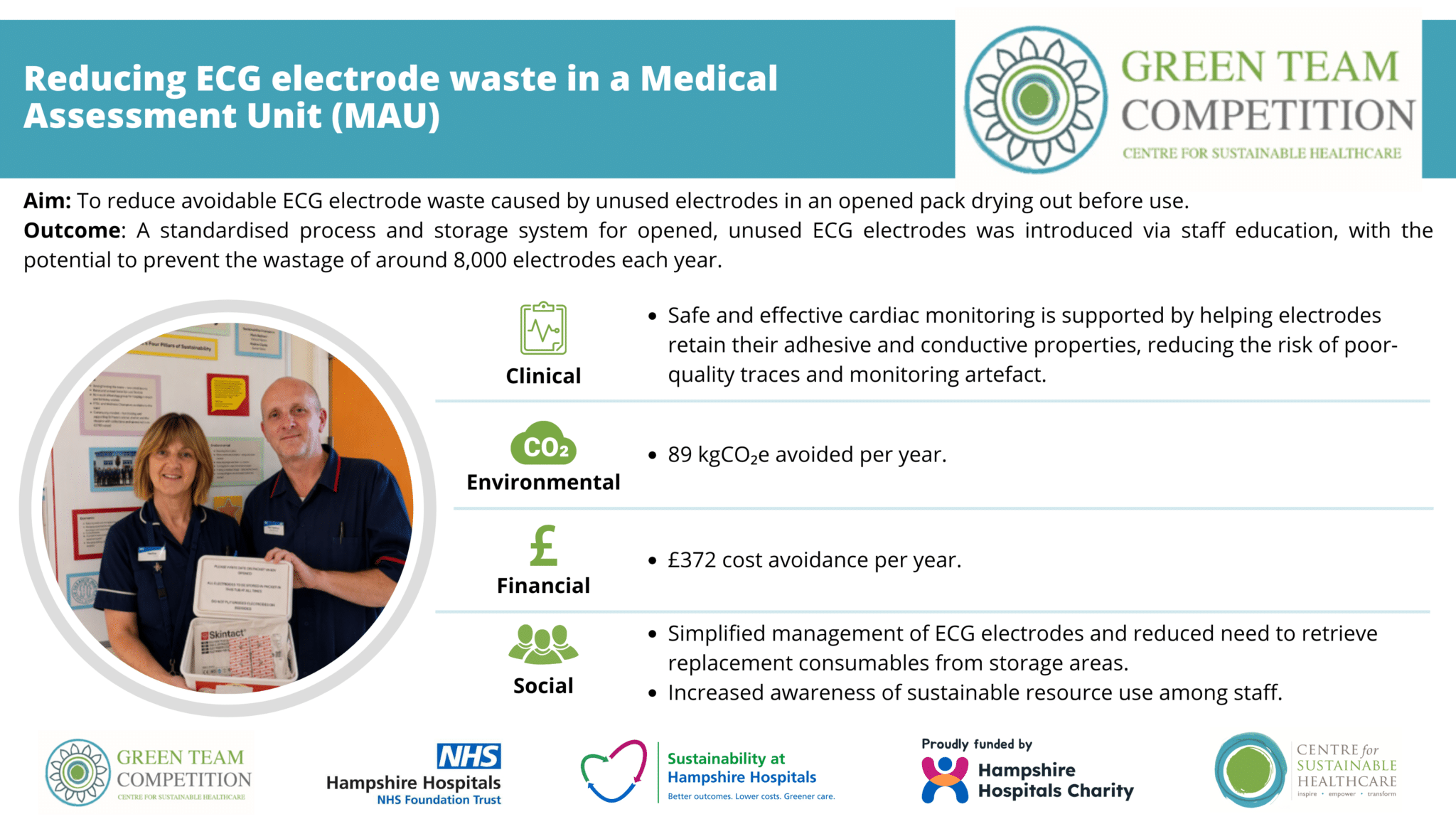
3. McGill Medical Assessment Unit (MAU), Winchester – Reducing ECG Electrode Waste
Team members: Mark Badham, Clinical Matron, McGill Ward and Nadine Clarke, Senior Sister, McGill Ward
Setting / patient group: 31-bed Medical Assessment Unit, Winchester.
Summary
The team identified unnecessary waste in ECG electrode use and storage, implementing changes to reduce over-ordering and waste from expired stock. Staff engagement increased awareness of sustainable resource use, with positive feedback and greater ownership of the Trust’s sustainability goals.
Outcomes
Financial savings of £372 per year, with environmental savings of 89 kgCO₂e per year. No adverse clinical impacts were identified; improved ECG electrode storage supports reliable monitoring and helps maintain safe, effective patient care.
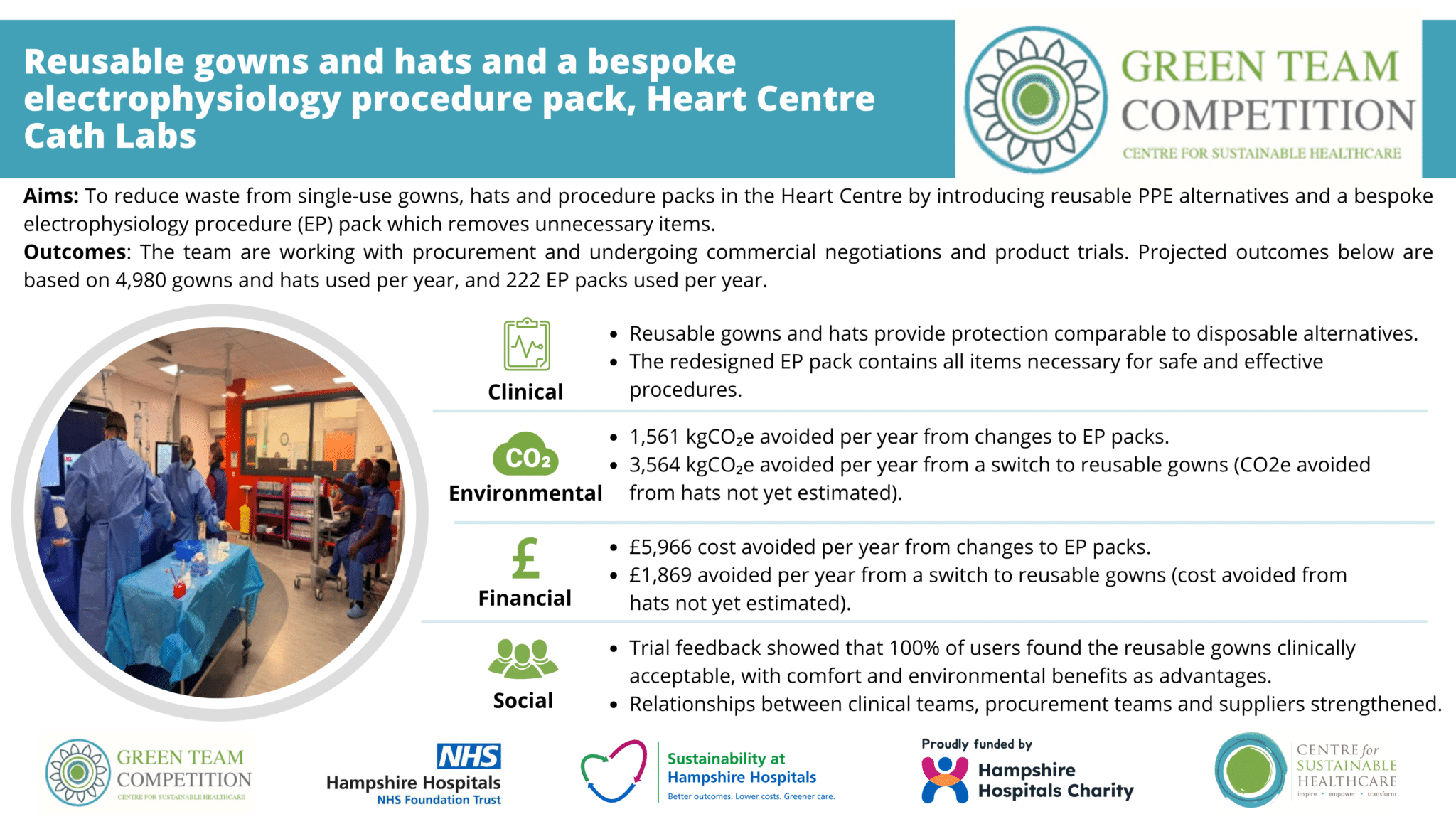
4. Heart Centre Cath Labs Team – Reusable Gowns, Hats and Bespoke Electrophysiology Procedure Pack
Team members: Kemi Adegboyega, Matron and Cheryl Gadsby, Sister
Setting / patient group: Cardiac Catheterisation Laboratory, HHFT.
Summary
The team introduced reusable gowns and hats alongside a streamlined bespoke electrophysiology procedure pack, reducing single-use product waste in a high-throughput clinical environment. Staff engagement around reusable products supported morale and encouraged broader sustainable practice.
Outcomes
Financial savings of £7,835 per year, with environmental savings of 5,125 kgCO₂e per year based on use of 4,980 gowns and hats and 222 packs per year. 100% of staff found reusable gowns clinically acceptable, with no adverse patient outcomes anticipated.
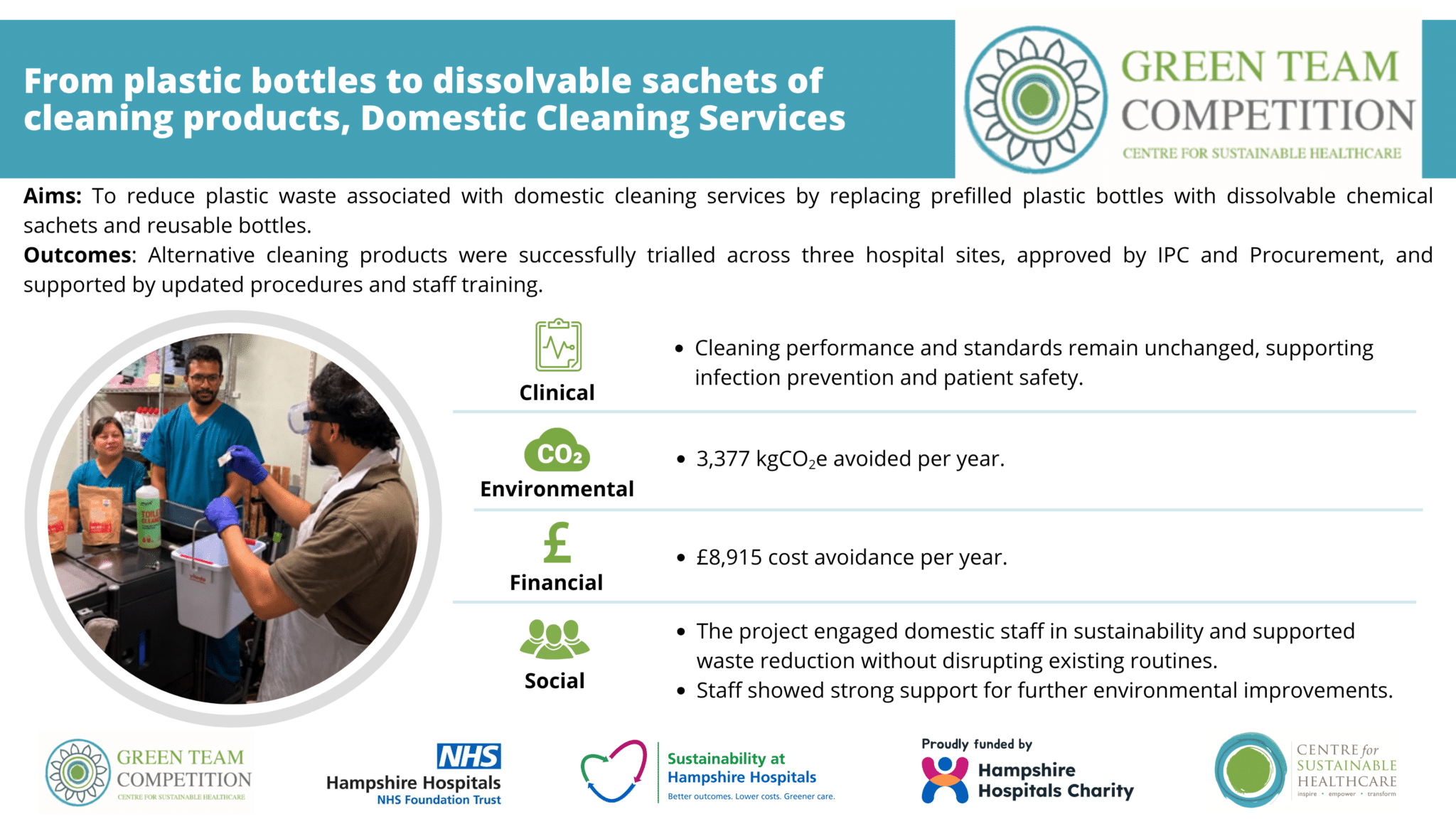
5. Domestic Cleaning Services Team – From Plastic Bottles to Dissolvable Sachets
Team members: Emmajane Todua, DOSM and Paul Norris, DOSM
Setting / patient group: Domestic Services across three HHFT sites, with full roll-out planned.
Summary
The team replaced single-use plastic bottles of cleaning product with dissolvable sachets, significantly reducing plastic waste without disrupting existing cleaning routines. Staff showed strong support for the change and for further environmental improvements across the service.
Outcomes
Financial savings of £8,915 per year, with environmental savings of 3,377 kgCO₂e per year based on projected full implementation. Cleaning performance remains unchanged, supporting infection prevention and patient safety.
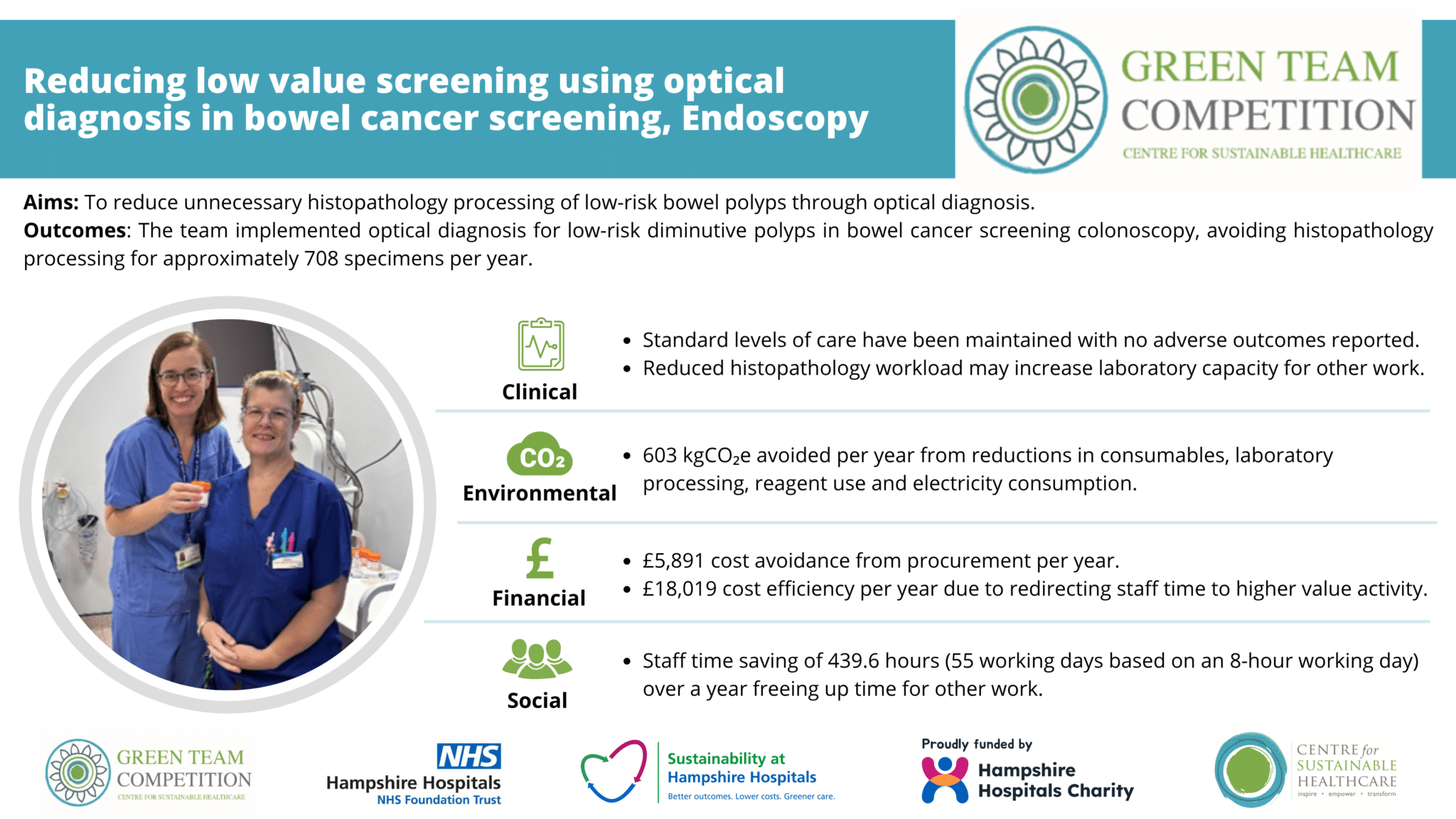
6. Endoscopy Team – Optical Diagnosis in Bowel Cancer Screening
Team members: Kiret Grewal, Senior BMS/Operations Manager, Cellular Pathology and Dr Maeve Tierney, Consultant Gastroenterologist
Setting / patient group: Endoscopy unit, one HHFT site.
Summary
The team introduced optical diagnosis to reduce the number of polyps sent for histological processing in bowel cancer screening, avoiding unnecessary biopsy and pathology workload. The change has been successfully rolled out, avoiding processing of 708 tests per year, and has the potential to extend to additional sites.
Outcomes
Financial savings of £23,909 per year, with environmental savings of 603 kgCO₂e per year. The project freed up 439.6 hours of staff time per year (equivalent to 55 working days), enabling faster results for other patients. Standard levels of care have been maintained with no adverse outcomes reported.
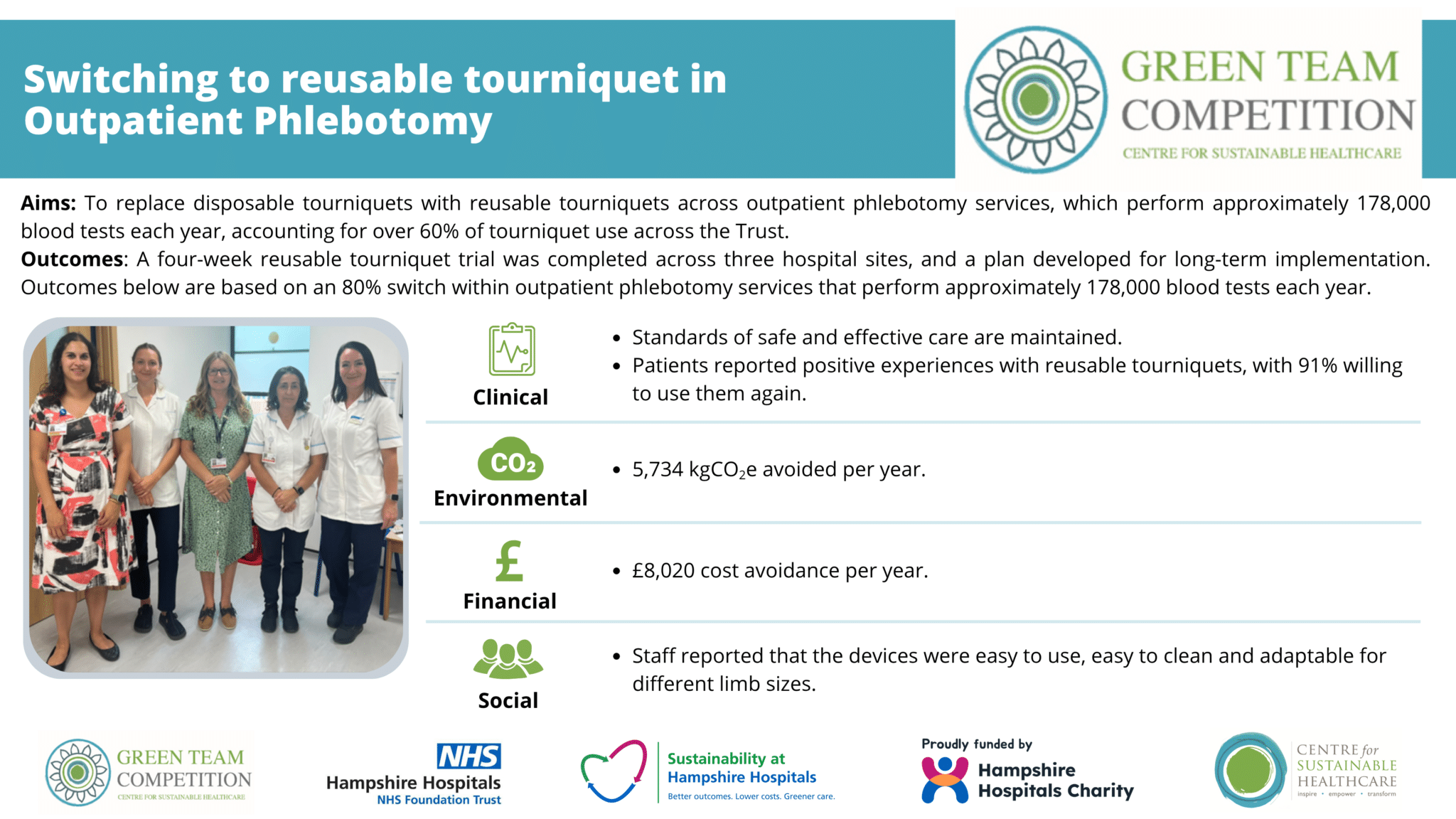
7. Phlebotomy Team – Reducing the Environmental Impact of Tourniquet Use
Team members: Lara Wells, Operational Manager POCT & Phlebotomy, Abbi-Rose Sherwood, Phlebotomy Team Leader (RHCH), Maria Vieira, Phlebotomy Team Leader (BNHH), Sally Bowie, Phlebotomy Team Leader (AWMH)
Setting / patient group: Outpatient departments performing 178,000 tests per year (over 60% of total tourniquet use in the Trust).
Summary
The team trialled reusable tourniquets as a sustainable alternative to single-use products in outpatient phlebotomy. A trial was undertaken and results modelled on an 80% switch across relevant departments. Patients found reusable tourniquets more comfortable, and 91% said they would be willing to use them again.
Outcomes
Financial savings of £8,020 per year, with environmental savings of 5,734 kgCO₂e per year modelled on 80% uptake. Staff reported reusable tourniquets are easy to use, easy to clean and adaptable for different sized limbs. Full roll-out is planned following the successful trial.