‹ Go back
Hampshire Hospitals Green Team Competition 2025
In October 2025, Hampshire Hospitals NHS Foundation Trust presented their Green Team Competition Showcase in partnership with the Centre for Sustainable Healthcare, celebrating the achievements of clinical teams working to embed sustainability into everyday practice.
The Green Team Competition is a clinical leadership and engagement programme for NHS organisations wishing to improve the sustainability of their services. Through the programme, eight clinical teams at HHFT were supported by CSH to identify, plan, implement and measure quality improvement projects using the Sustainability in Quality Improvement (SusQI) methodology.
Project support and implementation
CSH has worked directly with clinical teams across HHFT on eight projects to support them in delivering greener, higher-value care through the application of the Sustainability in Quality Improvement (SusQI) methodology. By combining clinical insight with practical mentoring, teams were guided to explore how their services could improve health outcomes while reducing environmental and social costs. Using the sustainable value equation as a foundation, four teams progressed to active project delivery, developing, implementing, and evaluating initiatives that bring meaningful, measurable change in line with wider sustainability goals.

Showcase Event
At the Showcase event on 21 October 2025, the teams presented their projects, including the financial, environmental and social outcomes achieved, as well as opportunities for next steps.
This year’s competition saw teams across HHFT praised for the quality of their projects, the depth of their reporting and their commitment to improving care for patients while reducing environmental impact.
The Showcase event brought together colleagues from across the Trust, with judging by:
- Alex Whitfield, CEO, HHFT
- Steve West, CFO, HHFT
- Zena Ludick, Medical Director, Medicine Division, HHFT
- Rachel Stancliffe, CEO, Centre for Sustainable Healthcare
Their insights helped recognise the projects that demonstrated significant, measurable improvements in patient care, staff experience and environmental outcomes. also demonstrated benefits to staff and patient wellbeing, safety and experience.
The impact
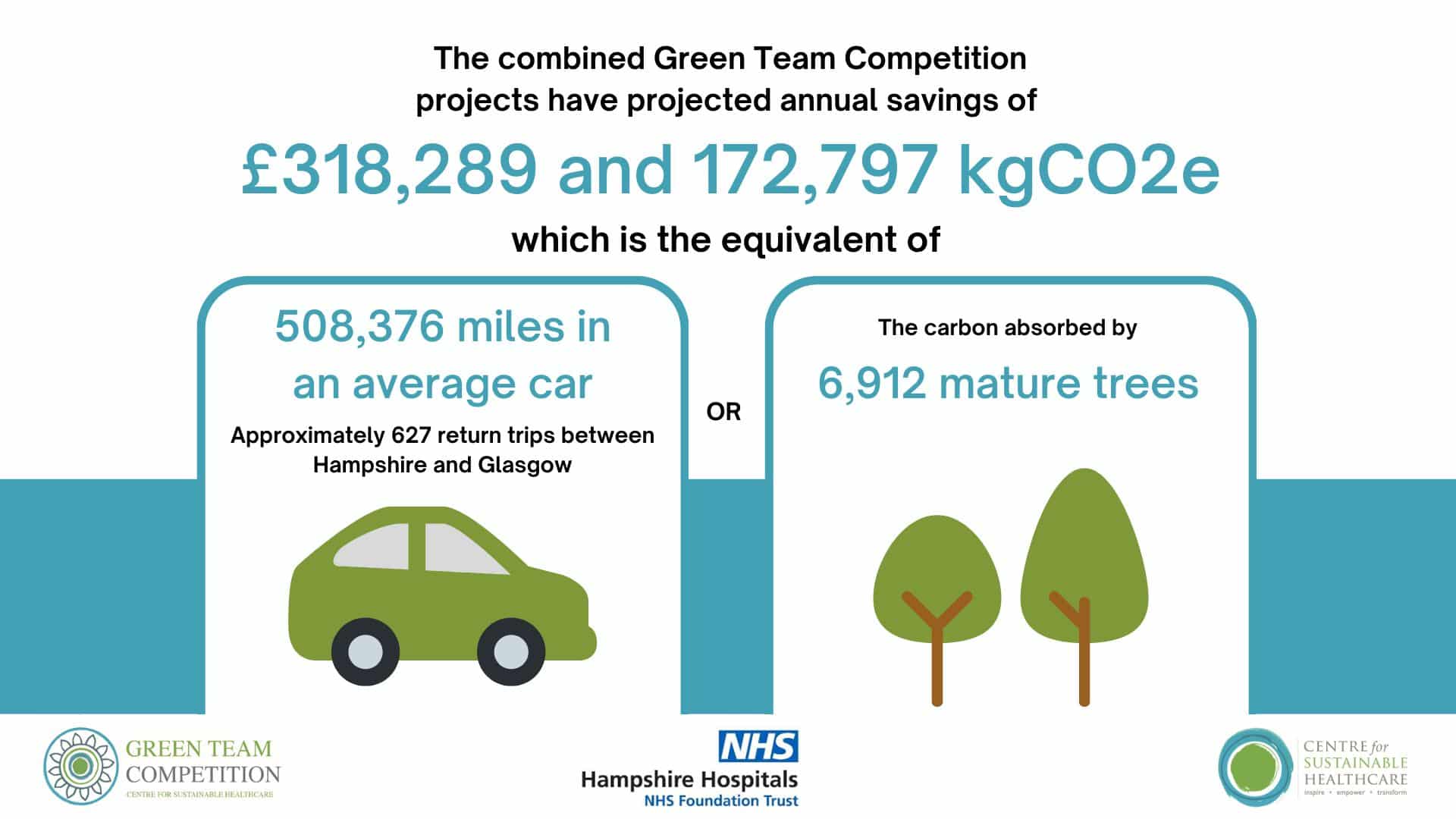
The Green Team Competition has brought meaningful, measurable value to HHFT. Collectively, the projects delivered through the competition are forecast to achieve £318,289 in annual cost savings and cut carbon emissions by approximately 172,797 kgCO₂e each year.
That’s the environmental equivalent of:
- Driving more than 508,376 miles in an average car
- Completing roughly 627 return journeys between Hampshire and Glasgow
- The annual carbon absorption of around 6,912 mature trees
Beyond the figures, the programme has helped foster a growing culture of sustainability within clinical teams, inspiring more thoughtful, efficient and person-centred approaches to delivering care.
These early achievements highlight how locally driven, well-supported initiatives can contribute to the NHS’s net zero ambitions while enhancing patient outcomes and streamlining the way services are delivered.
Winners
Congratulations to the winning team, the Phlebotomy Team
Their project set out to reduce unnecessary venepuncture by ensuring that all outstanding routine and urgent blood tests were taken at the point of draw or when first cannulating a patient (reducing double and triple bleeds). This simple but powerful shift improves patient experience, reduces duplication, and cuts avoidable waste across the Trust.
With patient comfort and safety at the heart of their work, the team achieved a meaningful reduction in repeated procedures, lowered clinical risk, and strengthened sustainable practice across wards. The project delivers clear environmental, financial and cultural benefits — and provides a strong model for Trust-wide improvement.
Highly Commended
- Emergency Department Team – Reducing Glove Use
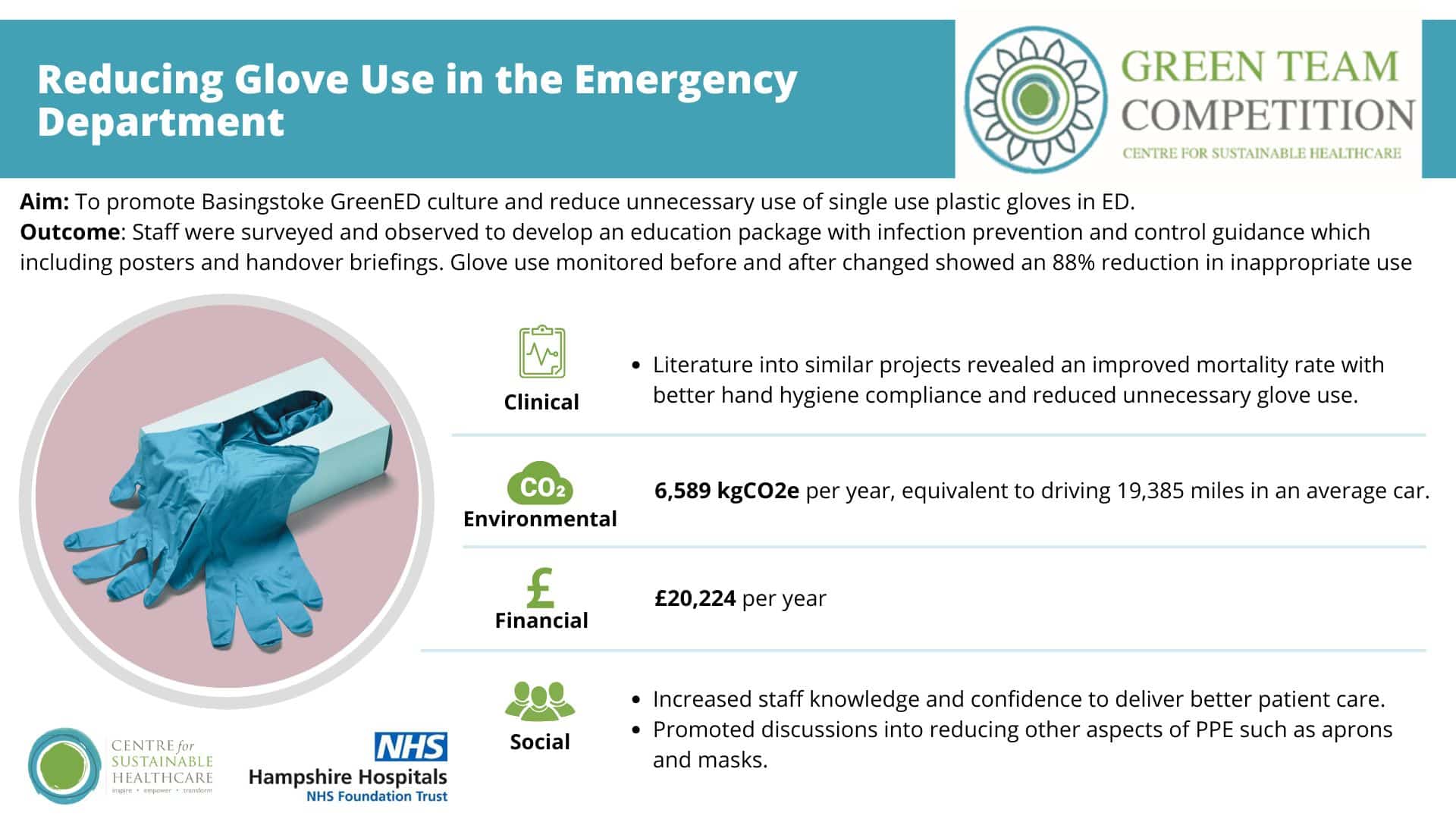
Congratulations to the Emergency Department Team for their project reducing unnecessary single-use glove use as part of the Basingstoke GreenED initiative. By combining education, observation and targeted messaging, the team achieved an 88% reduction in inappropriate glove use.
The project aligns strongly with national IPC and sustainability goals, enhancing clinical practice while lowering plastic waste. It offers a replicable approach that other departments can adopt to improve hand hygiene, reduce environmental impact and support safer, more efficient care.
2. Orthopaedic Physiotherapy Team – Reinventing Hip Precautions
Well done to the Orthopaedic Physiotherapy Team, recognised for their evidence-based overhaul of traditional hip precautions. Their updated approach improves patient recovery, reduces staff burden and removes outdated, low-value practices — all while maintaining individualised care for patients at higher risk.
The project demonstrates how reviewing longstanding clinical routines through a sustainability lens can drive better outcomes, reduce waste and improve staff and patient experience across the pathway.
3. Catering Team – Greener Choices, Cleaner Future
A further congratulations to the Catering Team, commended for their ambitious transformation of food and water provision across HHFT. Their plant-forward menu and rollout of mains-fed hydration systems have improved patient nutrition, reduced bottled water waste, and delivered substantial financial and carbon savings.
Their work shows how sustainable choices in food provision can meaningfully enhance patient wellbeing, cultural inclusion and quality of care — while reducing the environmental footprint of hospital catering services.
Green Team Competition projects
Read the full Impact Report here or view the project summaries below.
1. Phlebotomy Team – Making Every Venepuncture Count (Winners)
Team members:
- Connie Burton, Phlebotomy and Specimen Reception Manager
- Maria Viera, Abbi-Rose Sherwood, Sally Bowie, Phlebotomy Team Leaders
- James Freeburn, Facilities Project Lead
- Simon Preston, Chief Resident Doctor
Setting / patient group:
Inpatients undergoing routine and urgent blood tests.
Summary
The team identified repeated and unnecessary venepuncture as a significant source of patient discomfort, increased clinical workload and avoidable waste. By ensuring all outstanding routine and urgent blood samples were drawn whenever any blood was taken, or at the point of first cannulation, the team streamlined practice across wards. Communications were shared Trust-wide, and post-change data from one ward demonstrated strong potential for scaling. The project improved patient experience, reduced duplication and highlighted the value of coordinated sampling pathways.
Outcomes
The intervention reduced double and triple venepuncture, lowering the risk of skin trauma, bruising, vein damage and needlestick injuries. Annual savings are estimated at 8,977 kgCO₂e, equivalent to driving 26,411 miles in an average car while financial savings of £46,030 per year were identified.
Staff wellbeing improved, with reduced workload, more positive interactions and greater engagement in sustainability. Patients experienced fewer blood draws, enhancing comfort and satisfaction.

2. Reducing glove use in the Emergency Department, Emergency Department Team
Team members:
- Karoline Chalk ED QIP Trust Grade
- Melanie Koh Lin ED Physician Associate
- Emma Christmas & Sarah Noble EM Consultants
Setting / patient group: Emergency department .
Summary
The team sought to reduce unnecessary single-use plastic glove use within the Emergency Department as part of the Basingstoke GreenED initiative. Staff were surveyed and observed to shape an education package aligned with Infection Prevention and Control guidance. Posters and targeted handover briefings supported culture change. Monitoring before and after the intervention showed an 88% reduction in inappropriate glove use, improving both environmental performance and hand hygiene practice.
Outcomes
Literature from similar projects suggests improved mortality linked to better hand hygiene and reduced glove misuse. Environmental savings total 6,589 kgCO₂e per year, equivalent to driving 19,385 miles in an average car while financial savings are estimated at £20,224 annually.
The project increased staff knowledge and confidence, and stimulated wider discussions about reducing other single-use PPE items such as aprons and masks.
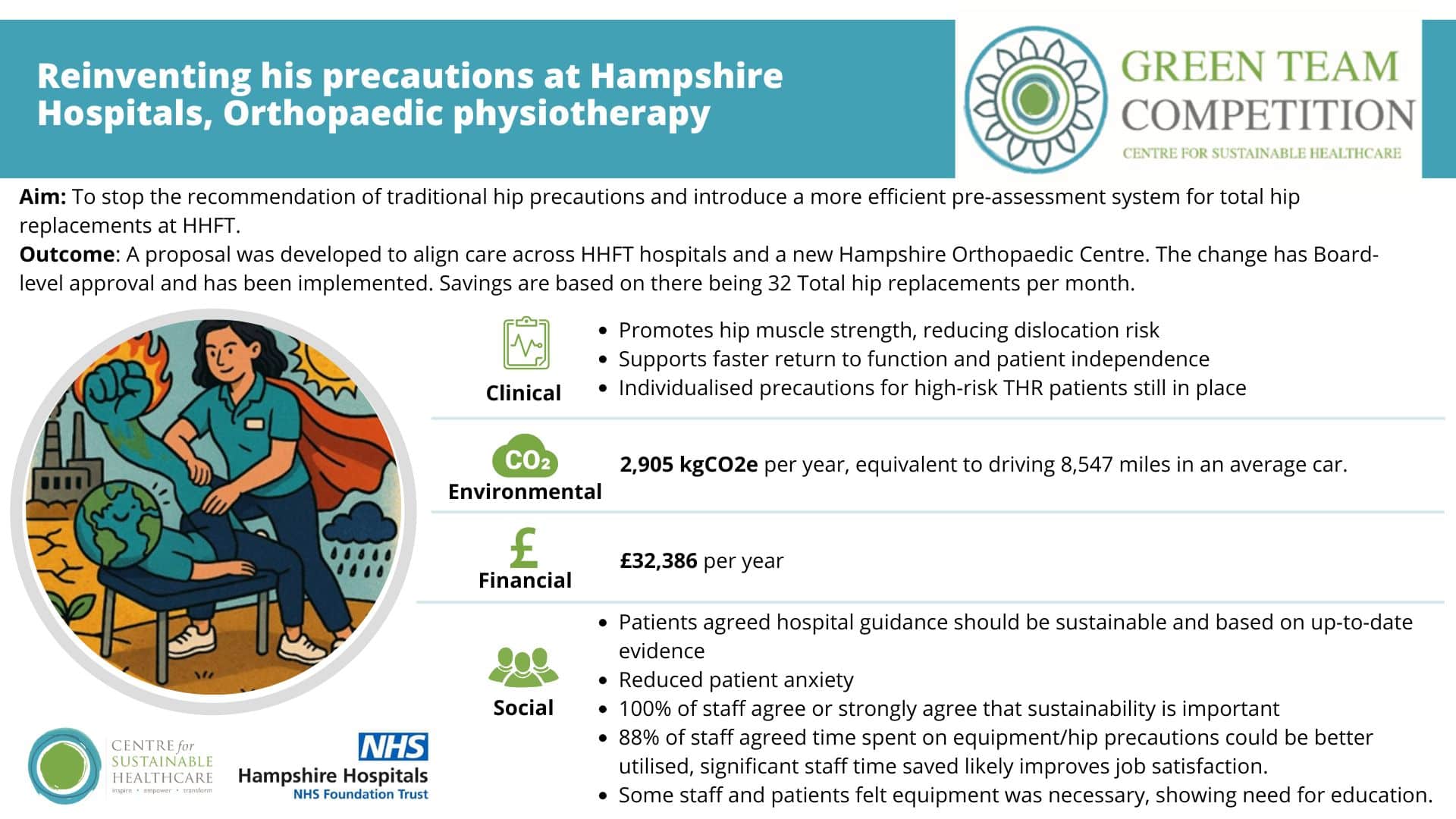
3. Reinventing hip precautions at Hampshire Hospitals, Orthopaedic Physiotherapy
Team members:
- Katie Thornton, physiotherapist
- Yaron Haziza, physiotherapist
Setting / patient group: Patients undergoing elective total hip replacement at Hampshire Hospitals.
Summary
The team aimed to eliminate outdated universal hip precautions and standardise a more efficient pre-assessment process. A Trust-wide review resulted in a new Hampshire Orthopaedic Centre approach, now approved at Board level and implemented across HHFT sites. The new model supports recovery, reduces dislocation risk and removes unnecessary restrictions, while maintaining individualised precautions for higher-risk patients. Annual savings are based on approximately 32 hip replacements per month.
Outcomes
Clinical benefits include improved muscle strength, reduced dislocation risk, faster return to independence and more appropriate tailoring of precautions.
Environmental savings are 2,905 kgCO₂e per year, equivalent to driving 8,547 miles in an average car and delivers £32,386 in annual financial savings.
Staff overwhelmingly agreed that sustainability is important, with many reporting reduced time managing outdated precautions and improved job satisfaction. Some staff and patients highlighted the need for further education on equipment use.
4. Greener Choices, Cleaner Future – Sustainable food and water transformation at Hampshire Hospitals, Catering Team
Team members:
- Teri Hope, Facilities Admin Lead
- Mark Nicholson, Deputy Head of Catering
- Catering team
Setting / patient group: Inpatients at Basingstoke and North Hampshire Hospital, staff and visitors across Hampshire Hospitals NHS Foundation Trust.
Summary
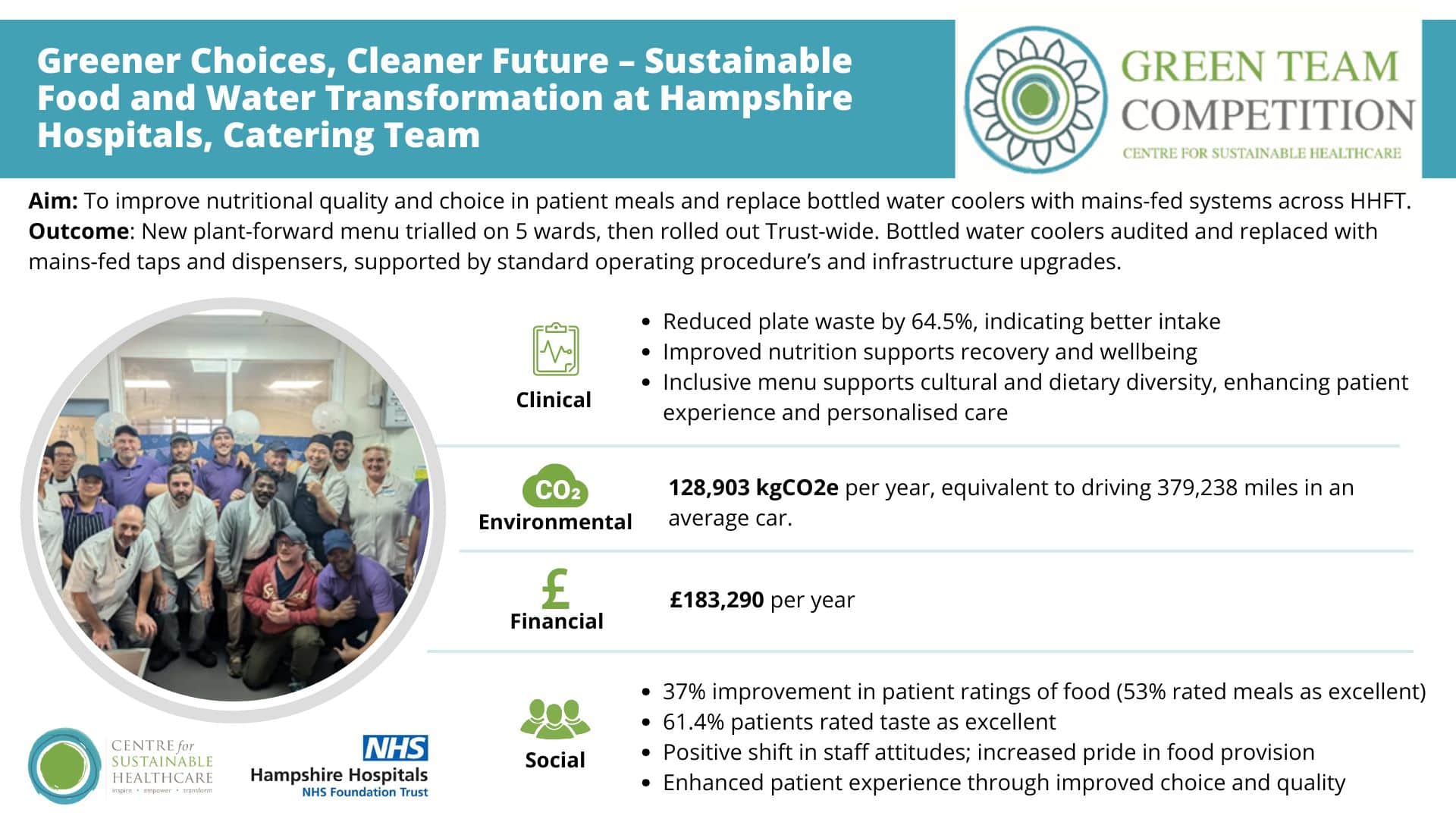
This project aimed to improve nutritional quality and choice while reducing bottled water waste. A plant-forward patient menu was piloted on five wards before full Trust-wide rollout. Bottled water coolers were audited and replaced with mains-fed taps and dispensers, supported by new standard operating procedures and infrastructure upgrades. The initiative improved patient nutrition, reduced plate waste and significantly cut the carbon footprint of hospital catering.
Outcomes
Clinical benefits included a 64.5% reduction in plate waste, indicating improved meal intake and nutritional value. Environmental savings are 128,903 kgCO₂e per year, equivalent to driving 379,238 miles in an average car and financial savings total £183,290 per year.
Social outcomes include a 37% improvement in patient ratings of food, increased pride among catering teams, enhanced inclusivity of menu options, and improved patient experience.
5. Reducing energy usage in Hampshire Hospitals Theatres, Theatres Team
Team members:
- Anja Templin (Clinical Matron, Theatres)
- Luke Hedges (Energy Manager)
Setting / patient group: Operating theatres, focusing on two theatres as the pilot site.
Summary
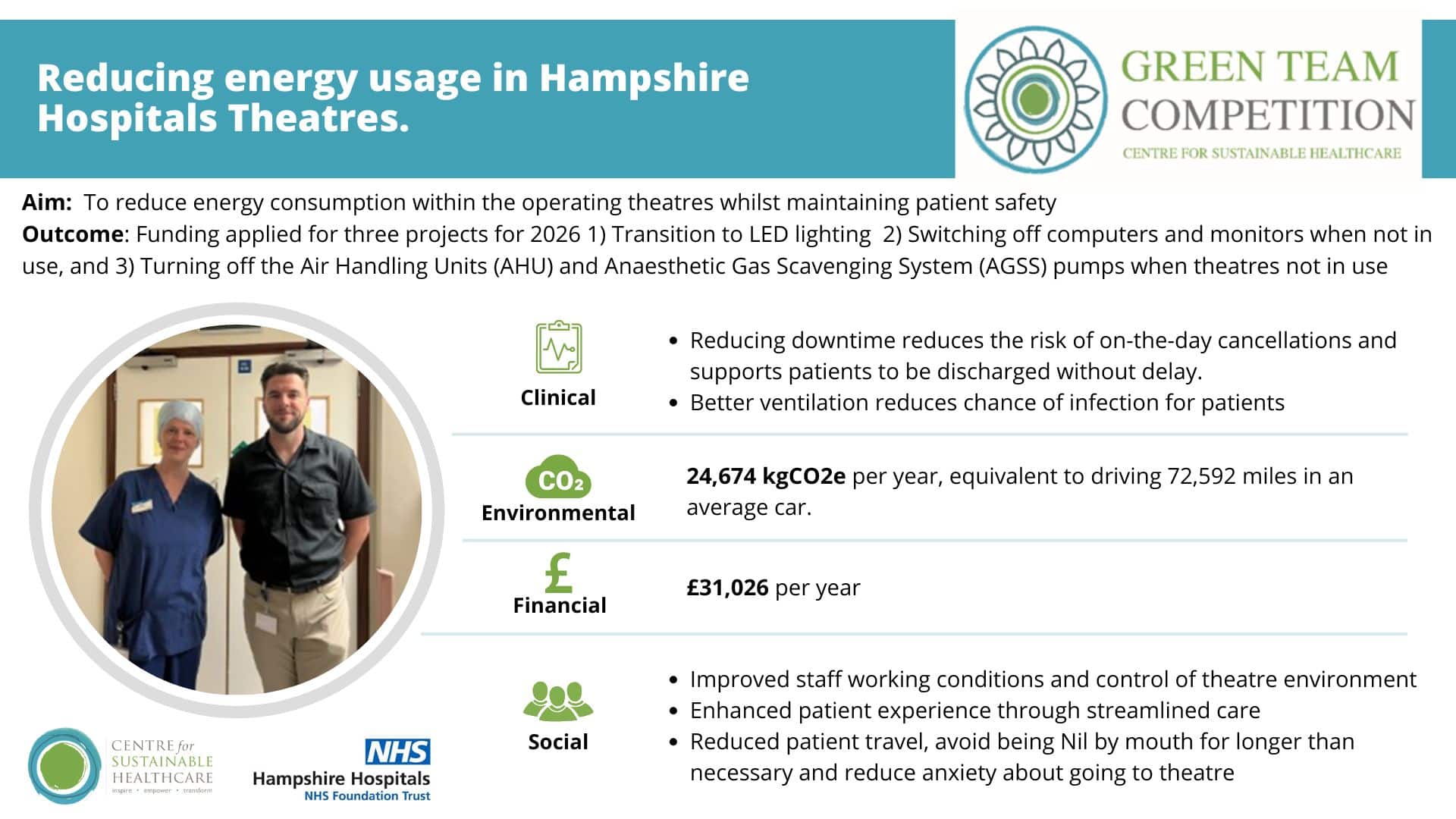
The project aimed to reduce energy consumption without compromising patient safety. Funding applications were submitted for three initiatives: transition to LED lighting, switching off unused computers and monitors, and shutting down Air Handling Units (AHUs) and Anaesthetic Gas Scavenging System (AGSS) pumps when theatres are not in use. The changes are expected to reduce cancellations, improve ventilation and enhance patient flow.
Outcomes
Environmental savings total 24,674 kgCO₂e per year, equivalent to driving 72,592 miles in an average car while financial savings are estimated to be £31,026 annually.
Social benefits include improved staff working conditions, smoother patient care, reduced fasting times and less anxiety before theatre.
6. Digitalisation of orthopaedic information and exercise booklets, Orthopaedic Physiotherapy
Team members:
- Harriet Corbett, physiotherapist
- Laura Thomson, physiotherapist
Setting / patient group: Trauma and elective orthopaedic wards at Hampshire Hospitals, adult patients pre- and post-operatively.
Summary
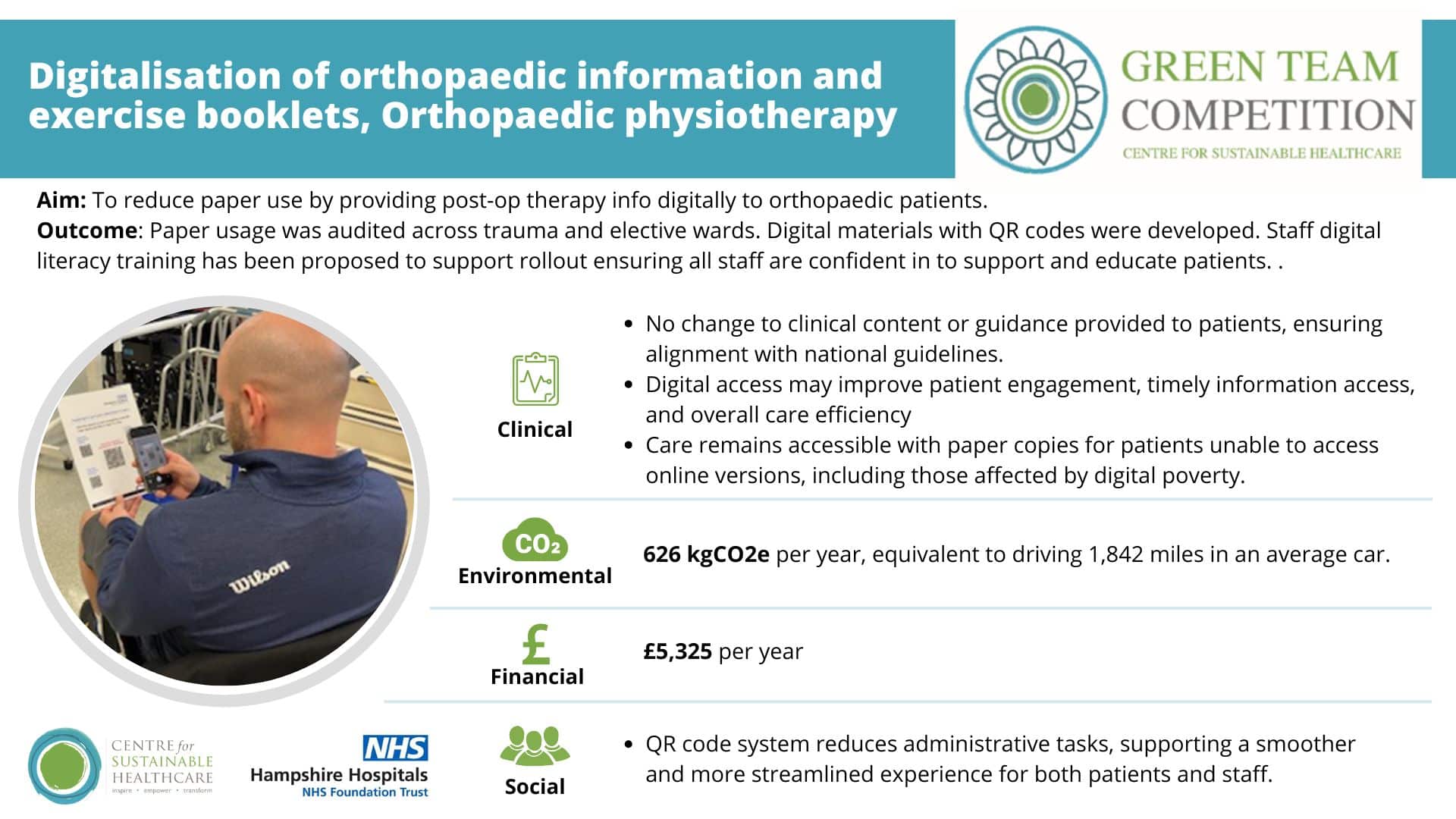
The project aimed to reduce paper usage by providing therapy information digitally via QR-code-enabled materials. Paper use was audited across trauma and elective wards, and digital content was developed to support more efficient communication. A staff digital-literacy programme has been proposed to ensure all teams can confidently support patients in accessing online materials while maintaining paper copies for those who need them.
Outcomes
The project achieved an estimated annual saving of 626 kgCO₂e per year, equivalent to driving 1,842 miles and a financial savings of £5,325.
Social outcomes include smoother administrative processes and a more streamlined experience for patients and staff.
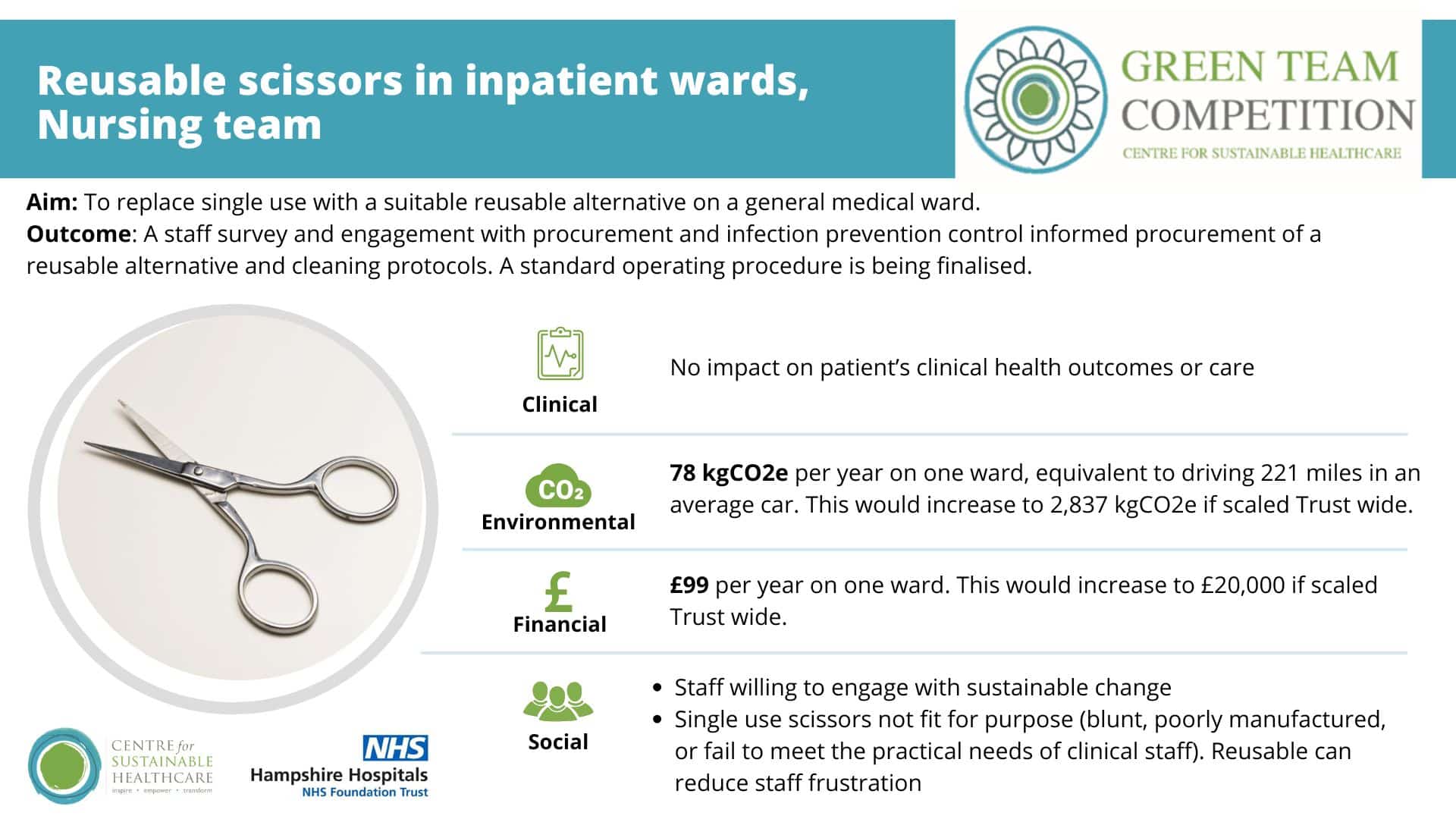
7. Reusable scissors in inpatient wards, Nursing Team
Team members:
- Mark Badham, Clinical Matron.
Setting / patient group: 26 bedded medical ward.
Summary
The team explored suitable reusable alternatives to single-use scissors, working closely with procurement and infection prevention colleagues. Staff surveys informed the selection of reusable tools and cleaning protocols. A standard operating procedure is being finalised to support safe and consistent implementation.
Outcomes
Environmental savings of 78 kgCO₂e per ward, equivalent to driving 221 miles — rising to 2,837 kgCO₂e if scaled Trust-wide. Financial savings of £99 per ward, or £20,000 Trust-wide.
Staff welcomed the change, noting that current single-use scissors are often blunt or unfit for purpose; reusable tools reduce frustration and meet clinical needs more reliably.
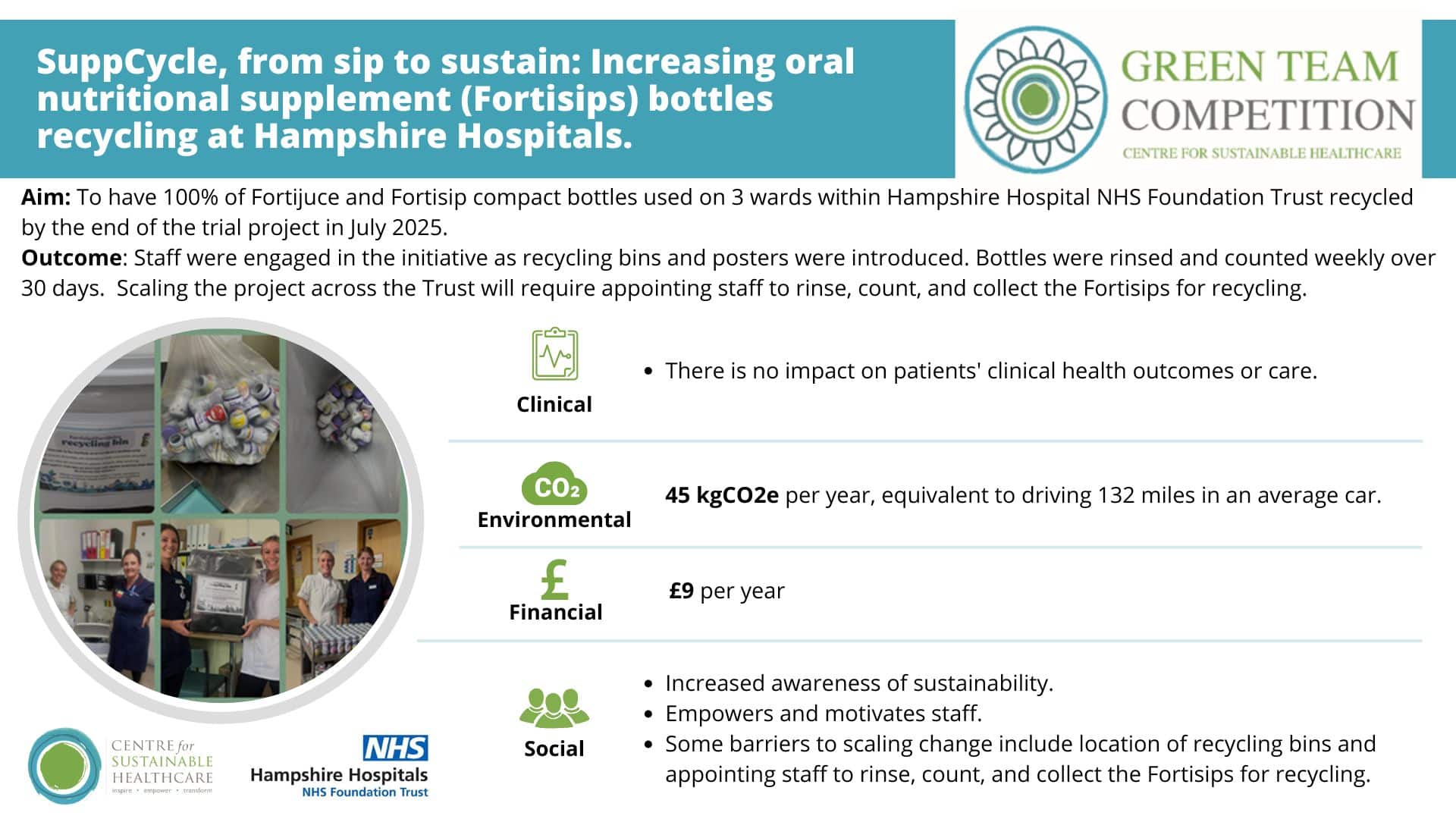
8. SuppCycle – Increasing oral nutritional supplement bottle recycling, Nutrition & Dietetics
Team members:
- Caz Francis (Dietitian) – Project lead and green team coordinator
- Rachael Wright (Lead Nurse for Patient Support Services) – Communication officer, bottle management
- Carla Jacobs (Matron, Victoria Ward) – Ward manager
- Claire Shergold (Matron, Shawford Ward) – Ward manager
- Matron (Overton Ward) – Ward manager
- Helen Murphy (Facilities Compliance and Waste Lead) – Waste and recycling logistics
Setting / patient group: Inpatients across three wards at Hampshire Hospitals NHS Foundation Trust.
Summary
The project aimed to ensure that 100% of Fortijuce and Fortisip compact bottles used across three wards were recycled by the end of the trial period in July 2025. To achieve this, staff were engaged through the introduction of dedicated recycling bins, posters and clear guidance. Over the 30-day trial, bottles were rinsed and counted weekly, demonstrating strong enthusiasm from ward teams.
Early results show that effective recycling is feasible within clinical environments, and that staff are motivated to contribute to sustainability initiatives. Scaling the project across the Trust will require identifying staff responsible for rinsing, counting and collecting bottles for recycling.
Outcomes
There was no impact on patients’ clinical health outcomes or care.
Environmental savings were estimated at 45 kgCO₂e per year, equivalent to driving 132 miles in an average car. Financial savings were £9 per year, with scope for growth if implemented Trust-wide.
Social benefits included increased staff awareness of sustainability, strong motivation to participate and clear insight into the practical barriers to expanding bottle recycling — such as bin placement and the need for dedicated time or roles to support processing.